
Can You Install Vinyl Flooring Over Tiles in Singapore? Complete Homeowner Guide
Yes, in many cases, you can install vinyl flooring over existing tiles in Singapore. This is one of the reasons vinyl flooring has become such a popular option for HDB flats, condos, and landed homes. Instead of hacking away old tiles and dealing with dust, noise, and extra renovation costs, homeowners can often overlay vinyl flooring directly over the existing surface if the condition of the floor is suitable.
For many Singapore homeowners, this creates a faster, cleaner, and more budget-friendly way to upgrade the look of the home. Whether you are renovating an older resale flat or refreshing a tired tiled floor in a newer property, vinyl overlay can be a practical solution when done correctly.
This guide explains when vinyl flooring can be installed over tiles, what conditions must be met, how the surface should be prepared, and when tile removal may still be the better option.
Why Many Homeowners in Singapore Choose Vinyl Flooring Over Tiles
Old tiled floors can make a home look dated, cold, and harder to match with modern interior styles. Replacing tiles completely often involves hacking, debris removal, subfloor work, and a longer renovation timeline. Overlaying vinyl flooring can reduce much of that disruption.
For homeowners who want a simpler renovation, vinyl flooring over tiles offers several advantages.
Less Hacking, Less Dust, Less Mess
One of the biggest benefits is avoiding tile hacking. Traditional tile replacement can be noisy, dusty, and disruptive, especially in occupied homes. Overlaying vinyl flooring helps reduce mess and can make renovation more convenient.
Faster Installation
When the existing tiled floor is in good condition, installation can be much faster than a full floor replacement. This helps homeowners complete renovation works within a shorter timeline.
More Cost Effective Than Full Tile Removal
Tile hacking, disposal, screeding, and reinstallation can significantly increase renovation costs. Overlaying vinyl over tiles may reduce labour and material costs, making it a more budget-friendly solution.
Better Comfort Underfoot
Compared to ceramic or porcelain tiles, vinyl flooring generally feels warmer and slightly softer underfoot. This can make daily living more comfortable, especially in bedrooms and living spaces.
Modern Design Upgrade
Vinyl flooring comes in a wide range of wood-look, stone-look, and contemporary finishes. This allows homeowners to transform older tiled interiors into cleaner, more modern-looking spaces without a full demolition.
Can Vinyl Flooring Really Be Installed Over Existing Tiles?
Yes, vinyl flooring can often be installed over tiles, but not every tiled floor is suitable for overlay. The success of the installation depends on the condition of the existing tiles and how well the subfloor is prepared.
In general, vinyl flooring can be installed over tiles when the surface is:
clean
dry
level
stable
free from loose or cracked tiles
If the tiles are uneven, hollow, badly damaged, or affected by moisture issues, overlaying vinyl may not be recommended until the problems are corrected.
When Installing Vinyl Flooring Over Tiles Makes Sense
Overlaying vinyl flooring over tiles is usually a good option when the existing floor is structurally sound and the homeowner wants to avoid major hacking work.
This can work well in:
HDB flats with existing ceramic or porcelain tiles
resale units undergoing light renovation
bedrooms and living rooms with stable tiled floors
homes where faster renovation is preferred
renovation projects with tighter budgets
For many homes in Singapore, overlaying vinyl flooring is especially attractive because it balances practicality, cost control, and aesthetics.
Conditions Your Existing Tiled Floor Must Meet
Before any installation begins, the existing tiled floor should be checked carefully. Even though vinyl flooring is flexible and practical, it still needs a suitable base to perform well over time.
The Tiles Must Be Firm and Secure
Loose or hollow tiles can create movement underneath the new vinyl flooring. Over time, this may lead to lifting, joint problems, or an uneven walking surface.
If any tiles are loose, they should be secured or repaired before overlay installation.
The Surface Must Be Level
A level floor is critical. Tile surfaces with lippage, uneven grout lines, or dips can show through the vinyl flooring over time, especially if the vinyl product is thinner.
If the tile joints are deep or the floor is uneven, self-levelling compound or surface preparation may be needed.
The Floor Must Be Clean and Dry
Dust, grease, soap residue, and moisture can affect bonding and overall installation quality. The existing tiled floor must be thoroughly cleaned and fully dry before the new flooring is installed.
There Should Be No Serious Moisture Problems
If there is trapped moisture, rising damp, or water seepage beneath the tiled floor, installing vinyl over tiles can lead to future problems. Moisture issues should always be fixed first.
Important Preparation Before Laying Vinyl Over Tiles
Proper preparation is the key to a successful vinyl overlay. Even when the tiles look acceptable, installers usually need to prepare the surface so the new floor performs properly and lasts longer.
Filling Grout Lines
Tile grout joints can telegraph through vinyl flooring if they are too deep or wide. This is why installers often fill or smooth out grout lines before installation.
Levelling Uneven Areas
If certain sections of the tiled floor are not level, self-levelling compound may be applied to create a smoother base.
Repairing Damaged Tiles
Cracked, chipped, or loose tiles should be repaired before overlaying vinyl flooring. Simply covering a damaged tile without fixing it first can weaken the final installation.
Deep Cleaning the Surface
The floor must be cleaned properly to remove dirt, wax, grease, or residue that may affect adhesion or installation quality.
Best Types of Vinyl Flooring for Installation Over Tiles
Not every flooring product performs the same way over existing tiles. Choosing the right type of vinyl flooring matters.
SPC Vinyl Flooring
SPC vinyl flooring is one of the most popular choices in Singapore for overlay projects. Its rigid core gives it greater dimensional stability and helps it handle minor imperfections in the subfloor better than softer vinyl products.
This makes SPC flooring a practical option for many HDB and residential tile overlay projects.
Click Lock Vinyl Flooring
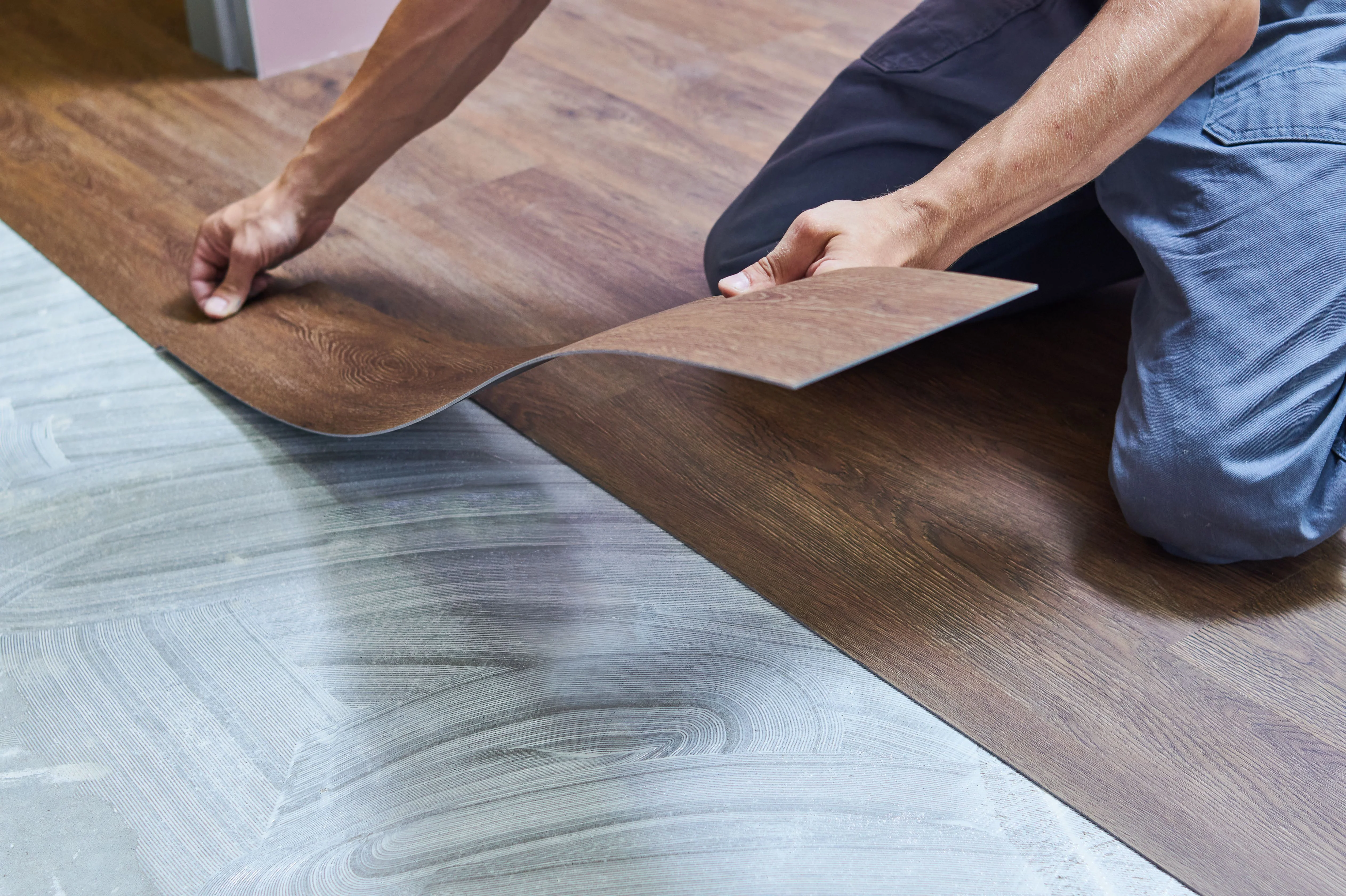
Click lock vinyl planks are often used for overlay installations because they do not rely entirely on adhesive. The interlocking system can make installation more efficient and is commonly used in residential settings.
Glue Down Vinyl Flooring
Glue down vinyl can also be installed over tiles, but the surface preparation usually needs to be more precise. Since the material sits directly on the substrate, imperfections may be more noticeable if the tiled floor is not prepared well.
Is Vinyl Overlay Suitable for HDB Flats in Singapore?
Yes, vinyl flooring over tiles is commonly considered for HDB flats in Singapore, especially when homeowners want to renovate without a full floor hack. It can be a practical option for resale flats and some BTO renovation upgrades, depending on the existing floor condition.
For HDB homes, one important consideration is floor height. Overlaying a new floor over old tiles increases the final floor level slightly. This can affect door clearance, transitions to other rooms, and certain built-in elements.
Because of this, proper site assessment is important before installation begins.
Homeowners exploring different flooring options can also browse LN Flooring to better understand vinyl flooring styles, practical uses, and suitable solutions for Singapore homes.
When You Should Think Twice Before Installing Vinyl Over Tiles
While vinyl overlay can work very well, it is not always the right solution. In some cases, removing the old tiles first is the smarter long-term choice.
The Tiles Are Very Uneven
If the surface has major height differences, significant lippage, or many uneven spots, preparation may become too extensive. Full removal may then make more sense.
Many Tiles Are Cracked or Loose
If multiple tiles are hollow, loose, or damaged, the floor may not provide a stable enough base for overlay.
There Are Moisture or Water Seepage Issues
Vinyl flooring should not be used to cover unresolved moisture problems. If water seepage is present, the root cause should be fixed first.
Floor Height Will Cause Problems
Overlaying vinyl increases the floor thickness. In some homes, this may create issues with doors, built-ins, bathroom transitions, or adjoining spaces.
The Existing Tile Surface Is Contaminated
Heavily waxed, greasy, or chemically treated tile surfaces may create installation difficulties if they cannot be properly prepared.
Professional Installation vs DIY
Some homeowners may wonder whether vinyl flooring over tiles can be done as a DIY job. While small spaces may seem manageable, professional installation is usually the better option when overlaying over existing tiles.
This is because the most important part of the project is not just laying the vinyl planks. It is the assessment and preparation of the tiled surface underneath. An installer needs to check for hollowness, moisture, unevenness, grout depth, and transition issues.
Poor preparation often causes more problems than the flooring product itself.
How Long Does Installation Usually Take?
The timeline depends on the floor size, tile condition, and how much preparation work is needed.
For straightforward residential installations, overlaying vinyl flooring over tiles can often be completed faster than a full tile replacement project. If levelling, patching, or repairs are needed, the timeline may be longer.
This is still usually much more convenient than hacking and replacing the entire tiled floor from scratch.
Will Vinyl Flooring Over Tiles Last?
Yes, vinyl flooring over tiles can last well when the installation is done correctly and the existing substrate is suitable. Long-term performance depends on:
proper floor assessment
thorough surface preparation
correct installation method
good quality vinyl flooring
regular maintenance
If these are done properly, overlay vinyl flooring can perform very well for many years in Singapore homes.
How to Maintain Vinyl Flooring Installed Over Tiles
Maintenance is generally simple.
To keep the floor in good condition:
sweep regularly to remove grit and dust
use a mild cleaner for mopping
avoid overly harsh chemicals
use furniture pads to reduce scratches
clean spills promptly
Like any flooring, its durability depends on both installation quality and day-to-day care.
Is Installing Vinyl Flooring Over Tiles a Good Idea in Singapore?
For many homeowners, yes. Installing vinyl flooring over tiles can be a smart renovation choice when the existing floor is level, secure, and dry. It can help reduce hacking work, shorten renovation time, lower costs, and give the home a fresh modern look.
However, it is not something that should be done blindly. The condition of the existing tiled floor matters a lot. If the base is unstable or uneven, problems may appear later even if the vinyl looks good at first.
The best approach is to treat overlay flooring as a condition-based solution, not a universal shortcut. When the subfloor is suitable and the preparation is done properly, vinyl over tiles can be a practical and attractive flooring upgrade for homes in Singapore.
If you are planning a flooring upgrade, it is worth getting the site checked properly so you can determine whether overlaying is the right option or whether full tile removal would be better in the long run.
Similar Articles


Contact Us
Got a question? We’re here to help. Drop us an email and we’ll get back to you as soon as we can.