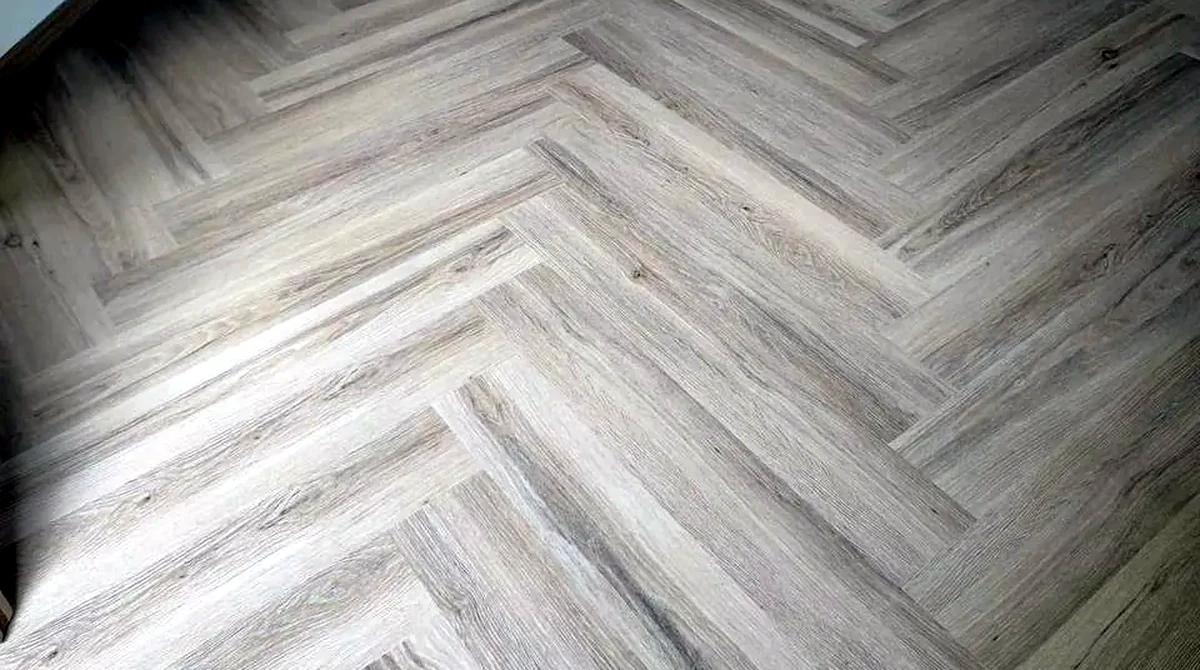
Parquet has a reputation as the "real" version of the herringbone and chevron floors everyone wants right now: solid timber, cut and laid by hand, the kind of floor that ages into a family home over decades. That reputation is earned. It is also the reason parquet is one of the more expensive and more demanding floors you can put in a Singapore home. As a BCA registered contractor that fits floors across HDB flats, condos and landed homes, here is a straight guide to what parquet actually is, what it costs here, and why, for most of our clients, we point them to a waterproof herringbone LVT instead.
A note before we start: LN Flooring does not supply or install parquet. This guide is here because so many clients researching a herringbone floor start with the word "parquet" and only later discover LVT does the same pattern. We would rather explain the trade-off honestly than let you find out after the sanding machine has been in your living room.
Where does parquet actually work in this home?
Tap a room for the honest verdict and the waterproof alternative
Living room
The room most people want the herringbone statement floor in
Bedroom
Lower traffic, but still humid year-round
Air-conditioned condo unit
Cold, dry air by day, humid and off by night
Kitchen or wet area
Splashes, spills, standing water risk
What parquet flooring actually is
Parquet is solid timber, cut into small blocks or strips and laid directly onto a prepared subfloor in a geometric pattern, most commonly herringbone, chevron or basket weave. Traditional parquet uses hardwoods like oak, teak or merbau. Because each piece is solid wood rather than a thin veneer over a core, the floor can be sanded and refinished multiple times over its life, which is the classic argument for it. It is also, for the same reason, laid and finished largely on site: the blocks go down, then the whole floor is sanded flat and sealed, which is dusty work that closes the room for several days.
How parquet differs from engineered wood and herringbone LVT
Engineered wood has a thin real-timber wear layer over a plywood core, which is more dimensionally stable than solid parquet but still a wood product with the same underlying water sensitivity. Herringbone LVT, which is what LN supplies, uses no wood at all: it is a waterproof vinyl plank printed and textured to look like timber, cut and pre-finished at the factory into the herringbone shape, so it clicks together on site with no sanding step at all.
What parquet costs in Singapore
Pricing for solid parquet is harder to pin to a single number than vinyl or laminate, because the timber species, the pattern, and the on-site sanding and finishing all move the price. As a market estimate, expect solid timber parquet supplied and fitted in Singapore to run well above S$6 to S$10 or more per square foot before finishing, depending on the wood and pattern complexity, and that estimate can climb further for premium species or intricate laying patterns. For a like-for-like comparison, our own-brand H Herringbone LVT runs S$4.90 per square foot, supply and install, with a 25-year material warranty and no on-site sanding at all.
The humidity problem, and why we lead with it
Singapore's mean annual relative humidity sits around 82%, and it does not sit still: on a dry afternoon it can fall to roughly 60%, then climb back above 90% before sunrise, according to the Meteorological Service Singapore. Solid wood expands and contracts as moisture moves in and out of it, and an air-conditioned condo adds a second cycle on top: cold and dry by day, warm and humid again once the unit is switched off at night. Over years, that repeated swelling and shrinking is what shows up as gaps between blocks, cupped edges, or in the worst case lifted sections that need re-sanding or replacement. It is manageable with careful climate control and acclimatisation before laying, which is why parquet still exists in tropical cities. It is not a floor you can install and then stop thinking about, which a waterproof plank is.
The maintenance cycle you are signing up for
Solid hardwood floors, parquet included, generally need refinishing roughly every 7 to 10 years depending on foot traffic and how well the floor is cared for day to day, according to This Old House (a US home-improvement authority; local pricing and timelines vary and should be confirmed with a Singapore refinishing specialist). Each refinish means sanding the surface back and resealing it, which takes the room out of daily use, generates a lot of dust, and can only be done a limited number of times before the wood layer runs too thin. Herringbone LVT never goes through this cycle: the wear layer is sealed at the factory and the floor is simply mopped for its entire life.
| Factor | Solid parquet | H Herringbone LVT (vinyl) |
|---|---|---|
| Material | Solid timber blocks, sanded and finished on site | Waterproof vinyl, factory-finished |
| Water resistance | Reacts to humidity, no standing water | 100% waterproof through the plank |
| Maintenance cycle | Sand and refinish roughly every 7-10 years | Mop only, no sanding ever |
| Installation | Laid then sanded/finished on site, room closed days | Click-together, ready to walk on same day |
| Up-front cost (est.) | Approx. S$6-10+ psf supplied and fitted | S$4.90 psf, supply & install |
| Warranty | Varies by installer, rarely long-term | 25-year material warranty |
LN supplies waterproof own-brand H Herringbone LVT, and does not carry parquet. We made that call on purpose: in Singapore's humidity a floor that does not react to moisture is the safer recommendation for nearly every home. Our H Herringbone series lays in the same true herringbone pattern parquet is known for, at S$4.90 per square foot supply and install, with a 25-year material warranty and a 1-year workmanship warranty, from a BCA registered, bizSafe Level 3 contractor.
So where does parquet actually make sense?
Parquet still has a real place: heritage and conservation properties where solid timber is part of the brief, dry climate-controlled spaces, and homeowners who specifically want a floor they can sand back to bare wood decades from now and are willing to manage the humidity risk and refinishing cycle to get it. For most Singapore homes, though, the reason people want parquet is the pattern, not the fact that it is solid wood. Once you separate the two, herringbone LVT gives you the pattern without the sanding, the humidity anxiety, or the higher price tag.
Read next
For the vinyl side of this comparison in more depth, see our herringbone vinyl flooring guide, which covers cost, styles and whether it is worth it room by room. Our waterproof flooring guide ranks every option by how it handles Singapore's climate, and the 2026 vinyl flooring buyer's guide ties the whole vinyl range together. If a wet area is part of your renovation, see the tile options on our tiles page, and when you are ready, send us your unit details for a quote per room.