Herringbone with LN is a flat S$4.90 psf supplied and installed: the LN H Series, a 5mm LVT with a 0.5mm wear layer. That is S$0.50 to S$1.70 psf above a straight-lay LN plank, and in the right space it is worth it. After 80+ herringbone installations across Singapore HDB flats and condos, the pattern consistently delivers the single biggest visual upgrade per dollar of any flooring decision. Here is the full breakdown: what it costs, where it works, and what to look out for before you commit.
What Is Herringbone Flooring?
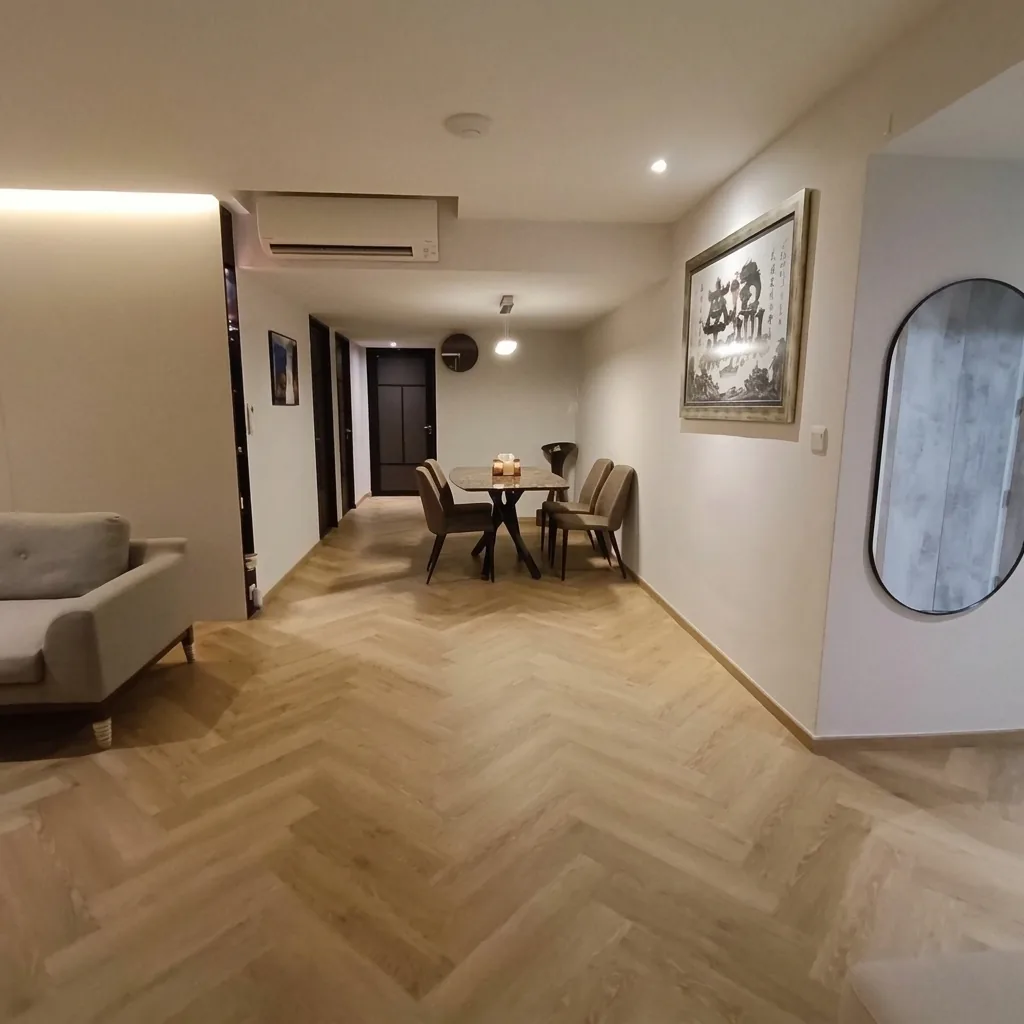
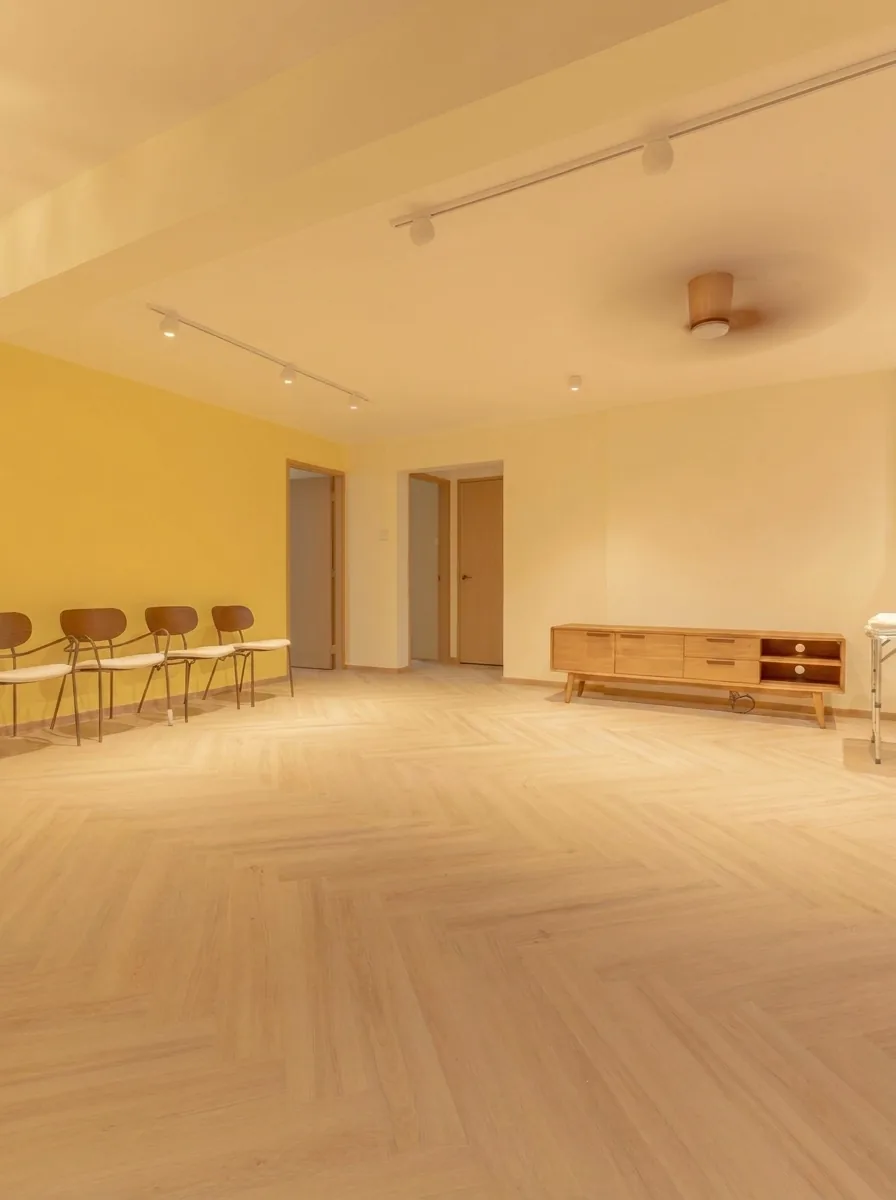
Herringbone is a layout pattern, not a material. The same vinyl planks used in standard straight-lay installations are cut and arranged in an interlocking zigzag. Each plank sits perpendicular to the two beside it, creating a continuous V-shape that reads as movement across the floor.
The name comes from a herring fish skeleton: the central "spine" of the pattern with angled "bones" branching outward. It has been used in Parisian apartments, English country houses, and Italian palazzos for centuries. In 2026, it is having a real moment in Singapore residential design, especially in condos and private estates, and increasingly in HDB premium renovation projects.
How Much Does Herringbone Vinyl Flooring Cost in Singapore?
LN prices herringbone as its own line rather than as a surcharge on a straight-lay plank. The LN H Series is a 5mm LVT with a 0.5mm wear layer, laid in herringbone, at a flat S$4.90 psf supplied and installed. The straight-lay 5mm series run S$3.20 psf (LN Core), S$3.50 (LN N), S$4.00 (LN Korea) and S$4.00–S$4.40 (LN Urban Stone), so choosing herringbone adds S$0.50 to S$1.70 psf.
That difference covers three things: additional cutting time (every alternate plank requires precise right-angle cuts), material wastage of 8–12% (compared to 5–7% for straight lay), and the slower pace of laying a pattern versus running planks in a single direction.
Like the rest of the LN vinyl range, the H Series carries a 25-year material warranty, plus a 1-year workmanship warranty on the installation.
| Space | Approx. Area | Straight Lay (LN Korea, S$4.00 psf) | Herringbone (LN H Series, S$4.90 psf) |
|---|---|---|---|
| HDB Living Room | 25–35 sqm | S$1,080–S$1,510 | S$1,320–S$1,850 |
| 3-Room HDB (full flat) | 55–65 sqm | S$2,370–S$2,800 | S$2,900–S$3,430 |
| 4-Room HDB (full flat) | 85–100 sqm | S$3,660–S$4,310 | S$4,480–S$5,270 |
| Condo | 80–100 sqm | S$3,440–S$4,310 | S$4,220–S$5,270 |
Supply and installation, converted at 10.76 sqft per sqm. Swap LN Korea for LN Core at S$3.20 psf and the straight-lay column drops about 20%.
Estimate your herringbone installation cost
The Top 5 Spaces for Herringbone Flooring
Herringbone is a statement pattern. It works best in rooms where it has space to breathe and be noticed, and the larger the unbroken expanse of floor, the more dramatic the effect. Ranked by how often we recommend it, and how much return each space gets for the premium:
- Living rooms. The single best herringbone space in any LN Flooring project. An open living-dining area of 25–45 sqm lets the pattern build momentum and creates a sense of direction, especially when the planks run diagonally to the main entrance. This is the room we deepen first in every condo living room style consultation.
- Open-plan dining areas. Where the living room flows straight into the dining table, herringbone reads as one continuous architectural gesture rather than two separate rooms with a rug boundary.
- Corridors and entrance foyers. Herringbone exaggerates length in corridors, because the V-shape draws the eye forward. This is why it has been used in hotel lobbies for decades, and it is the cheapest way to make a narrow HDB or condo hallway feel intentional.
- Condo master bedrooms. Common in Singapore condos where the larger floor area (15–25 sqm) gives the pattern room to develop and creates a boutique-hotel quality immediately. Less justified in a standard HDB bedroom under 10 sqm; see our HDB bedroom flooring guide for the straight-lay case there instead.
- Landed ground-floor common areas. Ground floor living rooms, staircases, and formal entertaining spaces in terraces and semi-detached properties are the fifth and final tier: the 40–60 sqm open footprint typical of a Singapore landed property ground floor is exactly the scale herringbone rewards.
Where we advise against herringbone: Small bedrooms under 10 sqm, children's rooms (where the premium is wasted), utility areas, and kitchens. In compact spaces, the busy pattern can feel overwhelming and the cost premium is hard to justify visually.
Pattern Orientation: Which Direction Should Herringbone Run?
The direction of the herringbone pattern significantly affects how a room feels:
- Parallel to the longest wall: Makes a room feel longer and more spacious. The most common and safest choice for open-plan HDB living areas.
- Diagonal (45° to the walls): The most dynamic and premium-looking option. Adds significant visual interest but also increases material waste by a further 5–8% and installation time by 20–30%. Used primarily in condo master bedrooms and entrance foyers.
- Perpendicular to the main view: Draws attention across the width of the room, creating a wider feel. Works well in narrow corridors and elongated dining areas.
For full HDB flat context and material selection, see our complete HDB Flooring Guide 2026. For overlay suitability, read our overlay flooring guide. If it is the pattern you are after rather than vinyl specifically, tile can be laid in a herringbone pattern too, so it is worth asking us what is available in our tile supply and installation service before you decide. New to vinyl altogether? Start with the vinyl flooring Singapore buyer's guide for variants, wear layers and 2026 prices.