Yes. In most HDB flats you can lay new vinyl straight over the existing tiles, with no hacking. That is an overlay: click-lock LVT planks go down on top of the old floor, so there is no demolition, no debris to dispose of, and no separate HDB renovation permit for dry areas. The tiles have to pass a check first. They must be firmly bonded, level within 3mm across any 1.8m span, and free of cracked or lifting pieces. The finished floor rises 5 to 7mm, so doors are measured and trimmed where needed, and wet zones such as bathrooms and the kitchen wet area still need a tiled floor over a waterproofing membrane. Overlay is faster, quieter and cheaper than a full hack, which is why it is now the default in Singapore renovations. If you're weighing overlay against a full hack in dollars first, our HDB flooring cost guide breaks down both side by side; if you're just getting oriented, start from the LN Flooring home page for the full range of what we install.
But overlay isn't a blanket solution. There are conditions your existing floor has to meet, and skipping the site assessment is where homeowners run into problems halfway through a job. This guide tells you exactly what we look for, and when we'd tell you to hack instead.
What Is Overlay Flooring?
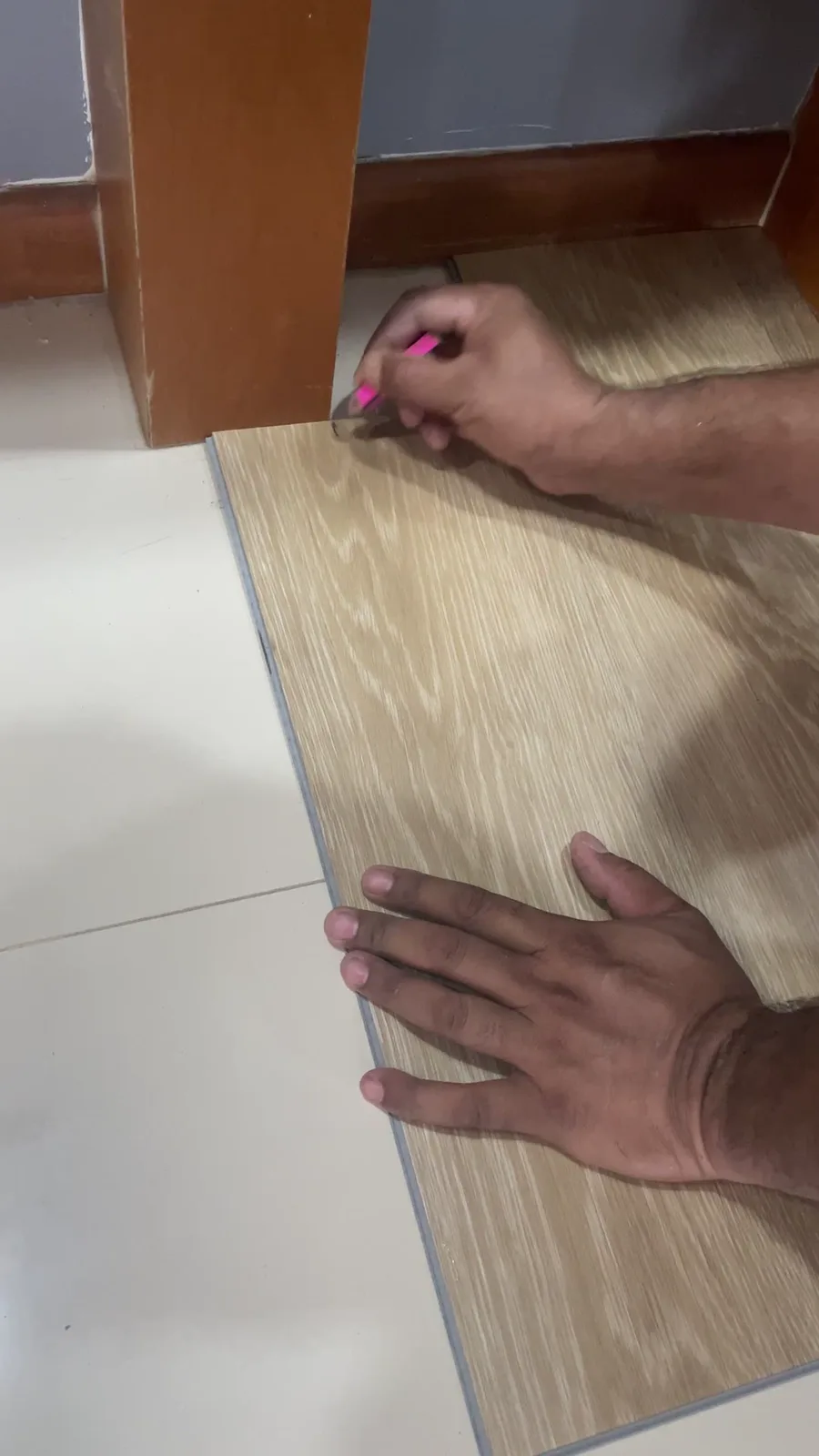
Overlay flooring means installing new flooring on top of your existing floor surface without removing it first. In the HDB context, this almost always means laying click-lock vinyl planks (LVT or SPC) directly on top of existing ceramic or homogeneous tiles.
The vinyl planks interlock together as a floating floor; they're not glued to the tiles underneath. This is what makes it reversible, fast to install, and suitable for HDB renovation without structural impact. Because no hacking is involved, there's no debris, no prolonged loud noise, and no need for screed work.
Why it's popular in Singapore: Most HDB flats built between 1990 and 2015 have 30×30cm or 60×60cm homogeneous tiles that are well-bonded and level, making them ideal candidates for overlay. A 4-room flat can be fully done in a single day.
Overlay Suitability Checker
Tick what's true of your existing floor. The verdict updates as you go, based on the same five checks our crew runs at every site visit.
Is your HDB floor ready for overlay?
Tick every box that matches your floor
The Suitability Checklist
Before we confirm any overlay job, our team conducts a site assessment. Here's exactly what we check, and what will cause us to recommend hacking instead.
Green lights: overlay works well when
- Existing tiles are firmly bonded, with no hollow or drumming sound when tapped
- Floor is level within 3mm across any 1.8m span
- No cracked or lifting tiles anywhere in the space
- Existing tile surface is clean and free of wax, heavy sealant or adhesive residue
- Door clearances allow for an additional 5–7mm floor height (or doors can be trimmed)
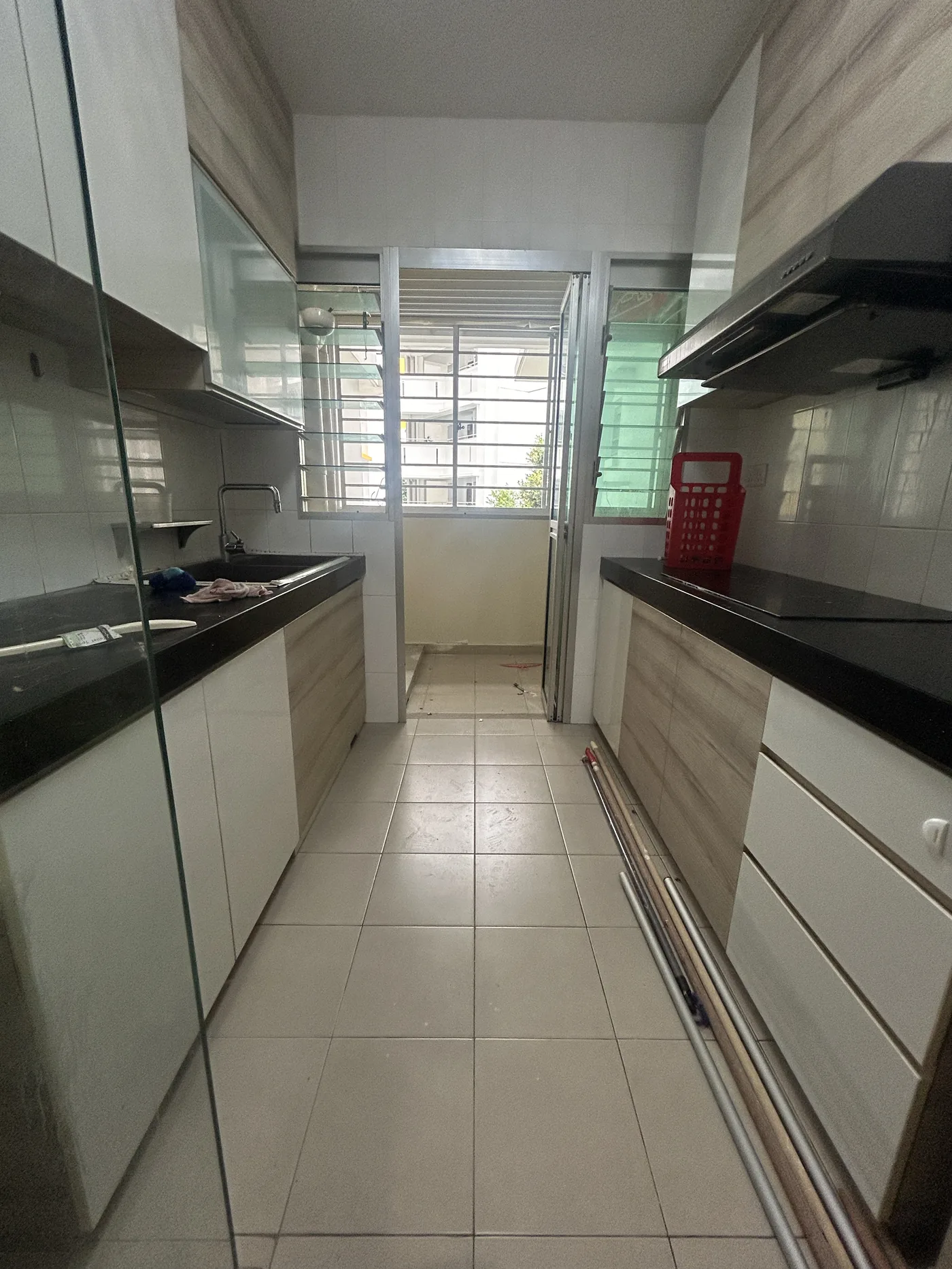
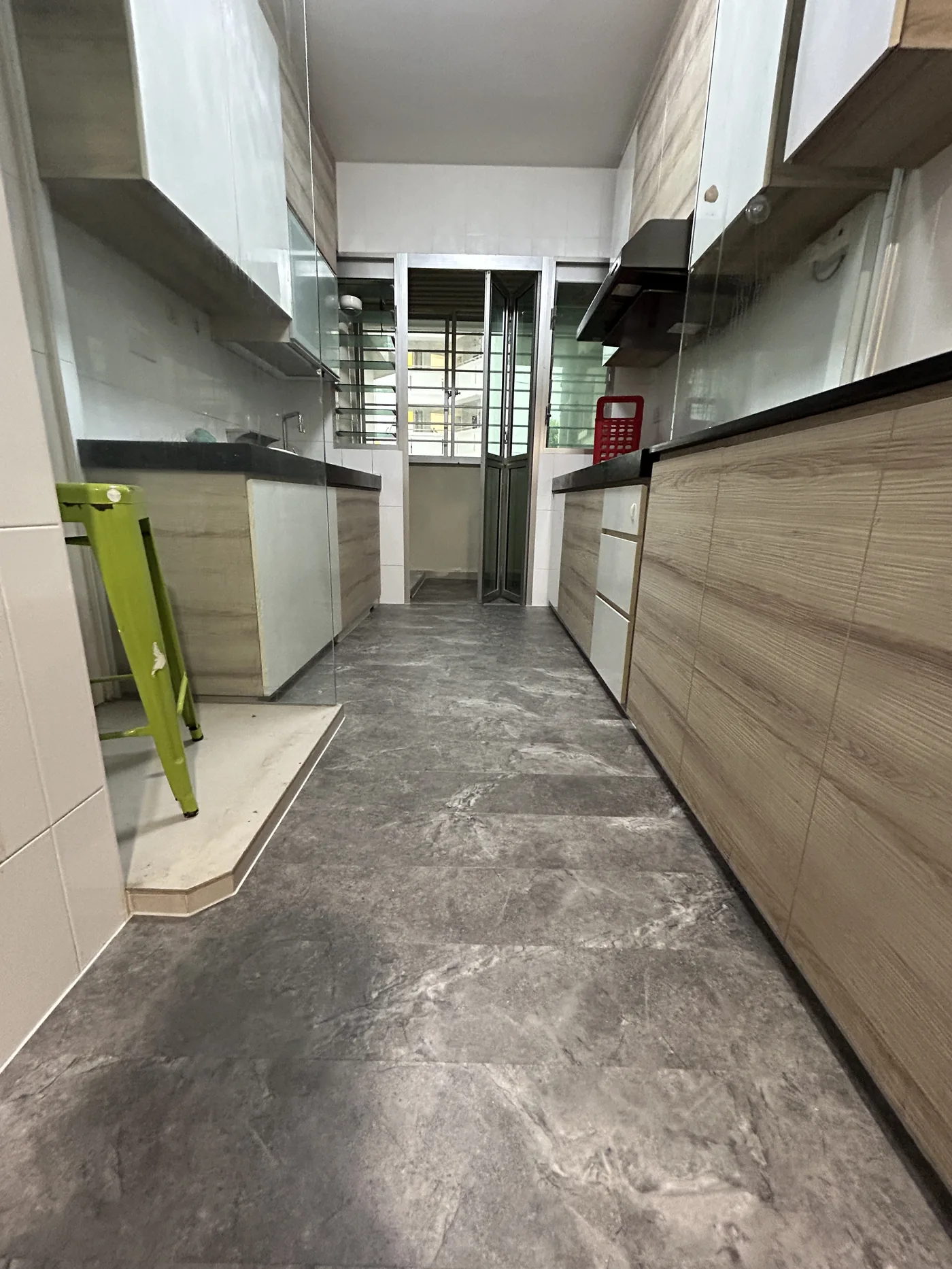
- The area to be overlaid is a dry zone (living room, bedrooms, hallways)
Red flags: we'd recommend hacking when
- More than 10–15% of tiles are hollow, which risks the overlay shifting over time
- Significant height differences between rooms (over 3mm) that would create trip hazards or visible unevenness
- Tiles are cracked, chipped or actively lifting in multiple areas
- The homeowner wants to cover wet areas like bathrooms or the kitchen wet zone, where overlay is not suitable without specialist waterproof underlays
- Previous overlay layers already exist, since stacking two overlays creates compliance and stability issues
- Severely uneven subfloor from old water damage or structural settlement
Hollow tile test: Knock firmly across your floor with your knuckles or a small tool. A solid bonded tile gives a flat "thud"; a hollow tile gives a higher-pitched "tap" or "ring." If you hear a lot of hollow spots, flag it before your site visit. It's the most common reason an overlay job gets converted to a hack.
Overlay vs Hacking: How Do They Compare?
| Factor | Overlay | Full Hack & Relay |
|---|---|---|
| Installation time | 1 day (most HDB flat sizes) | 4–6 days |
| Noise & dust | Minimal: click-lock, no hacking | Significant: pneumatic hacking, debris |
| Cost (4-room HDB ~90 sqm) | S$3,100–S$4,750 fully installed | S$6,000–S$12,000+ including hacking & screed |
| Disruption | Low: completed in a day, no curing wait | High: vacate for 4–6 days, wait for curing |
| Floor height increase | +5–7mm | Neutral (same finished height as before) |
| Suitable for wet areas | No (dry zones only) | Yes (tiles + waterproofing) |
| Reversibility | Fully reversible: planks can be removed | Not reversible |
| HDB permit required | No (no structural work involved) | Yes (hacking permit from HDB) |
What Happens on Installation Day
Once suitability is confirmed, an overlay installation for a standard HDB flat runs roughly like this:
Morning (9am): The crew arrives and conducts a final condition check of the floor. Any loose tile edges are secured and the surface is cleaned. Expansion gaps are measured along walls and door frames.
Mid-morning to mid-afternoon: Vinyl planks are click-locked into place row by row, starting from the most visible wall and working across the room. Door trims are cut and fitted as the installation reaches each door frame. This stage takes 7–8 hours for a full flat.
Late afternoon: Skirting is reinstalled or replaced, transitions between rooms are fitted with matching T-profiles, and the crew does a full walkthrough to check alignment, gaps and finish quality.
End of day: The flat is swept and you can walk on the floor immediately, as click-lock vinyl needs no curing time.
LN Flooring provides furniture moving assistance on installation day. Clear smaller items, fragile objects and valuables the night before. Our crew handles the larger pieces.
Which Vinyl Is Best for Overlay?
Overlay is a vinyl job, and the spec that matters most is dimensional stability, because you are floating a plank over an existing tile surface that may itself move slightly with Singapore's humidity swings. SPC (Stone Plastic Composite) is the rigid-core option often mentioned here. We do not carry SPC flooring. Our own-brand LVT range is specced for overlay and has handled it across hundreds of HDB flats, and the checklist below is what to look for whichever product you are quoted.
Key specs to look for in an overlay vinyl:
- Total thickness: 5–7mm. Thicker planks bridge minor surface imperfections better.
- Wear layer: Minimum 0.3mm for residential; 0.5mm if you have pets or high foot traffic.
- AC rating: AC3 or AC4 for HDB residential use.
- Underlay: An attached IXPE underlay adds acoustic dampening and slight cushioning, which improves the feel underfoot on a hard tile base.
Browse the six LN vinyl series, all with 0.5mm wear layers rated for Singapore's climate. If overlay turns out not to suit your flat, or you would rather have a tiled floor than a vinyl one, we also do tile supply and installation, for whole flats as well as wet rooms.
The Floor Height Question
This is the detail most homeowners don't think about until it's too late. Laying 5–7mm of vinyl over your existing tiles raises the finished floor level. In most HDB flats this is fine, but it affects two things:
Door clearances: Interior doors in HDB flats typically have 8–12mm of clearance between the door bottom and the existing floor. After a 6mm overlay, you may have only 2–6mm of clearance. That is enough for vinyl to slide under freely, but sometimes tight enough that the door drags. Our installers measure every door before starting and trim door bases where needed. This is included in our service.
Room transitions: Where overlaid rooms meet non-overlaid areas (like a tiled bathroom threshold), there will be a visible step or height difference. This is managed with aluminium or wooden transition profiles, which we install as part of every overlay job.
HDB Compliance: What You Need to Know
Overlay flooring within dry areas of an HDB flat does not require a separate HDB renovation permit, because no hacking, structural work or wet trades are involved. However, all renovation works in HDB must be carried out by a BCA registered contractor.
LN Flooring is BCA registered and BizSafe Level 3 certified. Every job we carry out is fully compliant with HDB's renovation guidelines. We handle all documentation, so you don't need to do anything additional for a standard overlay installation.
Note: If your renovation includes hacking work in other areas (e.g. a bathroom tile hack alongside a living room overlay), HDB notification requirements apply to the hacking portion, subject to HDB or MCST approval for that scope.
Cost Breakdown: What You're Actually Paying For
Overlay flooring costs in Singapore vary by material grade, flat size and any additional works like door trimming or skirting replacement. Here's a realistic breakdown for a standard 4-room HDB flat (approx. 90 sqm floor area, dry zones only):
| Item | Typical Cost |
|---|---|
| LVT vinyl supply & installation (90 sqm) | S$3,100–S$4,750 |
| Door trim cutting & refitting | Included |
| Skirting supply & installation | Included |
| Room transition profiles | Included |
| Debris removal & cleanup | Included |
| Estimated total (4-room HDB) | S$3,100–S$4,750 |
Prices vary based on the vinyl series selected, across the six LN series. Our entry-level LN Core starts from S$3.20/sqft, and the range runs up to S$4.90/sqft for the H Series herringbone. WhatsApp us for a fixed-price quote. We provide itemised written quotes before any work begins, and we quote tile jobs the same way, per project.
Real Projects: Overlay in Singapore HDB Flats
We've completed overlay installations across hundreds of HDB flats in Singapore, from 2-room flexi units in Queenstown to 5-room flats in Tampines and Sengkang. The most common scenario is a homeowner who's just finished their MOP (Minimum Occupation Period) and wants to refresh the look without the disruption of a full renovation.
In most cases, the original homogeneous tiles that HDB installs are well-bonded and perfectly flat, which makes them ideal for overlay. The job gets done in a day, and the homeowner comes home to a completely different-looking flat. See our completed projects gallery for real before-and-after photos.
Overlay decided? The HDB vinyl flooring overlay service page carries the live psf rates and books the free site measurement. Still weighing up vinyl itself? The vinyl flooring Singapore buyer's guide covers variants, wear layers and prices in one read.