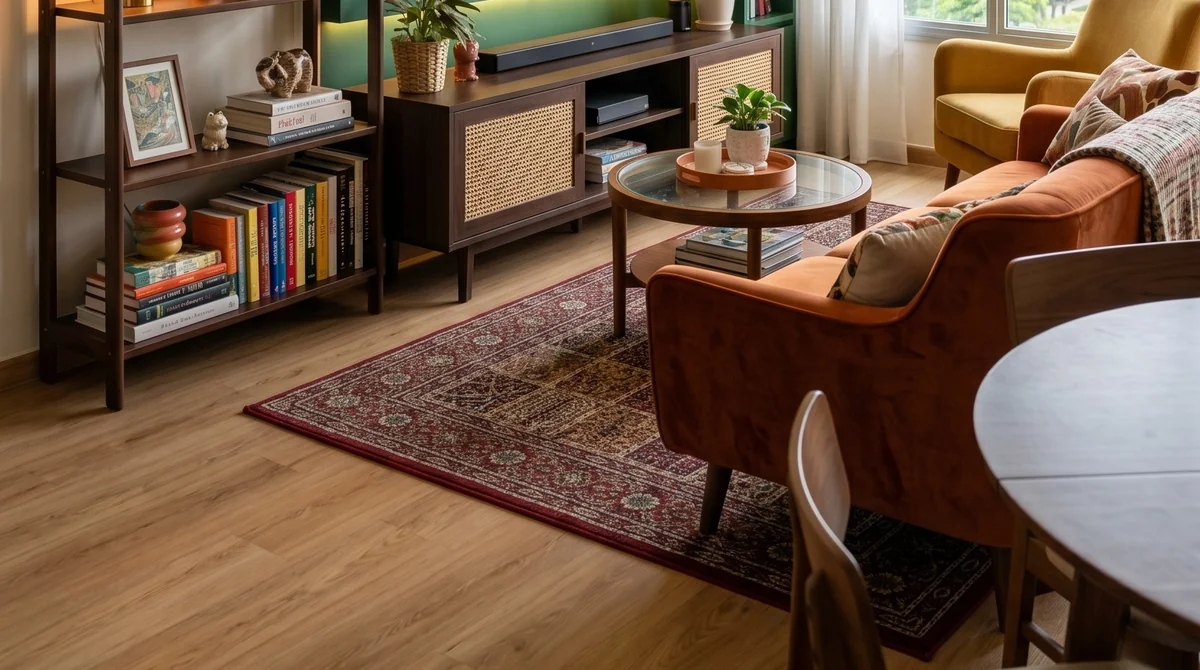
For Singapore homes, both SPC and LVT are solid choices, but they serve different needs. SPC (Stone Plastic Composite) wins on stability and durability in Singapore's heat, which is why the wider market pitches it for living rooms and high-traffic areas. LVT (Luxury Vinyl Tile) is softer, quieter, and warmer underfoot, making it better for bedrooms. LN Flooring sells and installs LVT only, not SPC — our LN Korea Series LVT is the closest match to SPC-style dimensional stability, with a warmer feel underfoot. Here's the full breakdown so you can choose correctly for your specific space.
What Is the Core Difference Between SPC and LVT?
Both SPC and LVT are types of vinyl flooring: synthetic, 100% waterproof, and available in a wide range of wood and stone looks. The difference is in what's inside.
LVT has a flexible polymer core. It's built in layers: a backing layer, the decorative film, and a transparent wear layer on top. The flexible core makes it slightly springy underfoot, so it feels comfortable, quiet, and warmer to the touch.
SPC replaces the flexible polymer core with a rigid composite of limestone powder and PVC. This stone-based core is what makes SPC dimensionally stable. It barely expands or contracts with temperature or humidity changes. In Singapore's climate, where temperatures swing between 24°C (air-conditioned interior) and 32°C+ (outdoor), this matters more than it does in temperate countries.
Head-to-Head Comparison: SPC vs LVT
| Factor | SPC | LVT | Edge |
|---|---|---|---|
| Core type | Rigid limestone composite | Flexible PVC polymer | Different |
| Waterproof | 100% waterproof | 100% waterproof | Tie |
| Dimensional stability (heat) | Expands <0.05% per 10°C | Expands 0.1–0.2% per 10°C | SPC |
| Comfort underfoot | Hard, firm | Softer, warmer | LVT |
| Sound insulation | Moderate (hollow sound possible) | Better natural dampening | LVT |
| Scratch resistance | Very high (rigid core) | High (flex absorbs impact) | SPC |
| Price (4-room HDB overlay, ~970 sqft) | S$2,500–S$4,500 market | S$3,100–S$4,750 LN rate | LVT |
| Suitable for overlay | Yes | Yes | Tie |
| Commercial use | AC4 rated: yes | AC3 typically: light use | SPC |
| Lifespan (Singapore conditions) | 15–25 years | 10–20 years | SPC |
Why Dimensional Stability Matters in Singapore
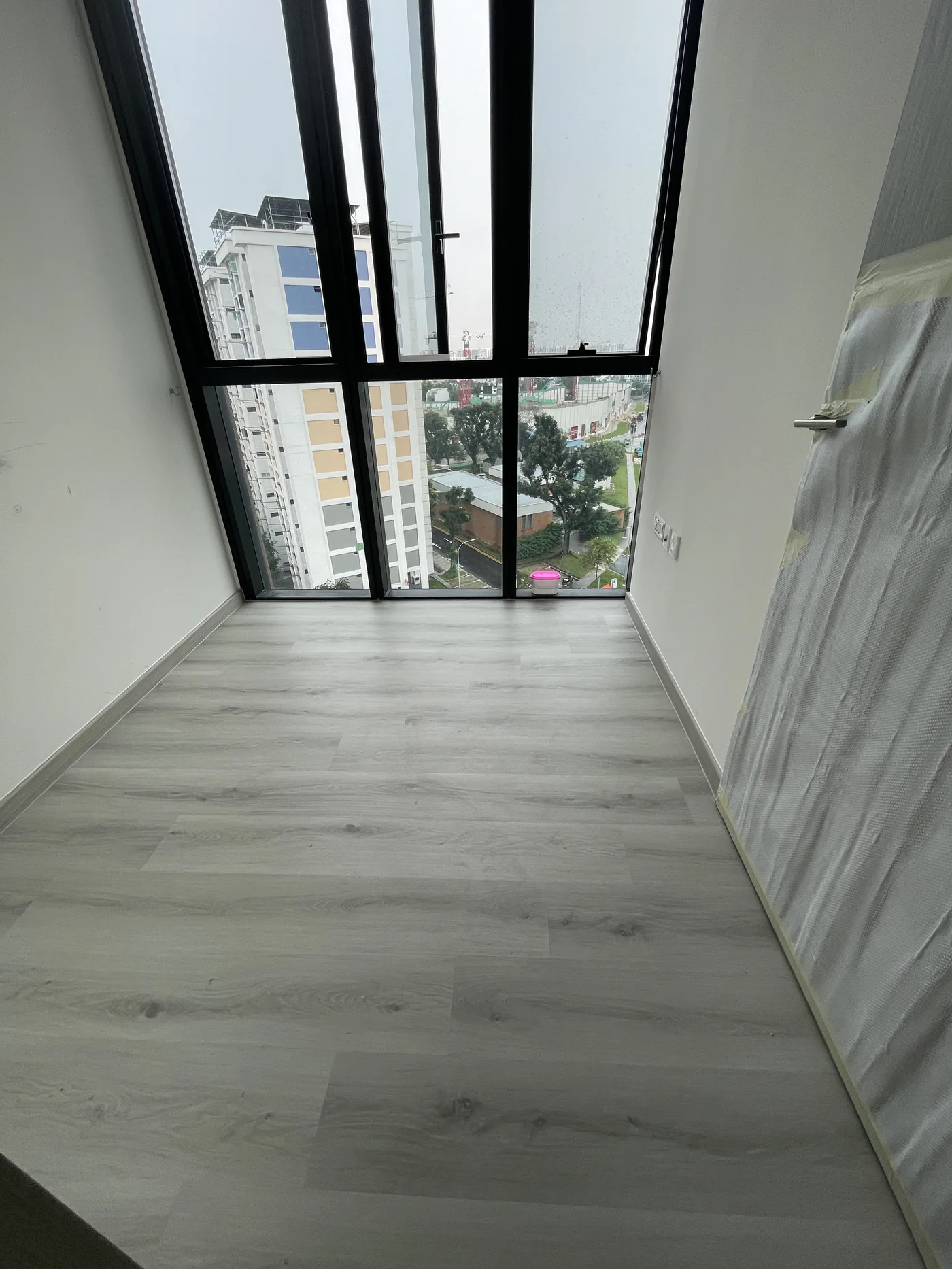
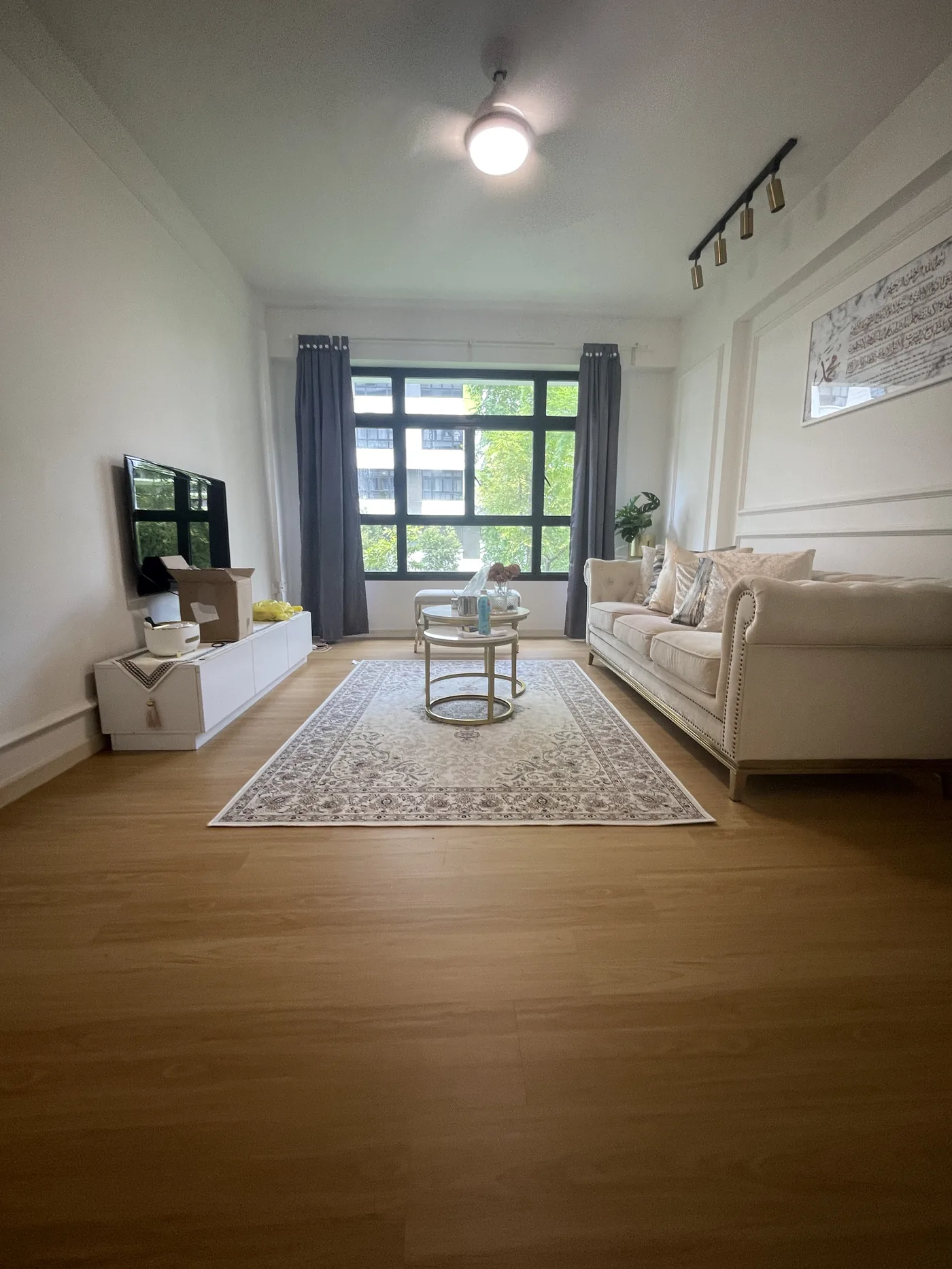
This is the factor Singapore homeowners most commonly underestimate. In countries with mild climates, LVT's slight flex and expansion are never an issue. In Singapore, the daily temperature differential between morning and afternoon (and between air-conditioned and non-air-conditioned spaces) creates a constant cycle of expansion and contraction in your floor.
Over months and years, this can cause LVT planks to develop slight gaps at the joints, or to "peel" slightly at the edges in rooms without consistent air-conditioning. SPC's rigid core handles this without visible change.
In practice: if the room has consistent air-conditioning, LVT is fine. For a corridor, a room that sits unoccupied all day, or a space that swings between hot and cool, the wider market's usual answer is SPC. LN Flooring does not carry SPC flooring, so for those rooms we point homeowners at the LN Korea Series LVT, which is made to tighter dimensional tolerances and is the closest match we have to SPC-style stability, or at tile if you want a harder, cooler surface.
Room-by-Room: How the Market Splits SPC and LVT
Where the market puts SPC
- Living rooms and dining areas (high traffic)
- Corridors and entrance areas (direct sunlight, heat)
- Study rooms in non-air-conditioned HDB flats
- Commercial spaces (offices, retail, F&B)
- Homes with large dogs or heavy furniture
Where the market puts LVT
- Bedrooms (comfort and warmth underfoot)
- Children's rooms (softer surface, quieter underfoot)
- Air-conditioned home offices
- Any room where a softer, quieter floor matters
- Budget-conscious renovations with moderate traffic
That split is how the wider Singapore market sells the two cores — it is not a shopping list from us. For the rooms in the left-hand column, our answer is the LN Korea Series LVT: tighter dimensional tolerances, 0.5mm wear layer as standard.
What LN Flooring actually supplies: we do not carry SPC flooring. Our own-brand LVT vinyl covers living rooms, corridors and bedrooms, and where you want a harder, cooler and longer-lived surface we supply and install tile instead, in any room of the house. This article is here because homeowners ask us to compare the two honestly, not because we are selling you SPC.
Korean SPC vs Economy SPC: What the Difference Actually Is
Not all SPC is equal. Korean SPC flooring, manufactured under tighter industrial tolerances than most Chinese or Malaysian-produced alternatives, consistently delivers better click-lock joints, more accurate plank dimensions, and longer wear layers (0.5mm is standard in Korean output, versus 0.3mm in economy SPC). On the market the premium over economy SPC runs roughly S$3–S$6 per square metre.
Planks made to tighter tolerances fit together with less gap variance, and after 500+ installations we can say that shows up in how a floor looks a few years in. That is a point about manufacturing quality, not about the core material — it applies to LVT exactly as much as it does to SPC.
LN Flooring does not sell SPC at any grade, economy or Korean, so we are not the people to buy it from. Manufacturing tolerance is why our own LN Korea Series LVT is Korean-made, and it is the series we put in living rooms and corridors that take daily wear.
Installation: Does One Take Longer Than the Other?
No significant difference. Both SPC and LVT use click-lock installation systems for overlay applications, and both can be floated over existing HDB tiles in a single day for most 3-5 room flats. See our full guide to HDB flooring installation timelines for a per-room breakdown.
SPC is marginally easier to cut cleanly with a snap cutter due to its rigid core. LVT's flexibility means it can conform slightly to minor subfloor irregularities, which can be an advantage on older HDB floors with slight unevenness.
Which Should You Actually Choose?
If your flat is consistently air-conditioned: LVT throughout is the straightforward choice, and every LN series carries a 25-year material warranty. This is what we most commonly install for Singapore homeowners, from S$3.20 psf supplied and installed.
If parts of your home run hot and unconditioned — a corridor, a study nobody uses in the daytime, a west-facing living room — that is the case the market makes for SPC. We do not carry it. Our answer for those rooms is the LN Korea Series LVT: tighter dimensional tolerances so seam lines stay clean through the heat-then-aircon cycle, with a 0.5mm wear layer as standard. If you have decided you specifically want a rigid stone-cored floor, you will need a contractor who stocks SPC, and we would rather tell you that than sell you something else.
And if the reason you are looking at SPC is that you want a floor that is harder, cooler and lasts longer than any vinyl, the honest answer is tile rather than SPC. That is a job we do too: see our tile supply and installation service, which covers whole homes, not only wet rooms.
For more context on how these options compare to tiles and laminate, read our complete HDB Flooring Guide 2026.
What the market specs per room, and what LN would install:
LN's pick:
SPC and LVT are two variants inside the wider vinyl category. For the full picture of variants, wear layers, room-by-room suitability and 2026 prices across all six LN series, start with our vinyl flooring Singapore buyer's guide.