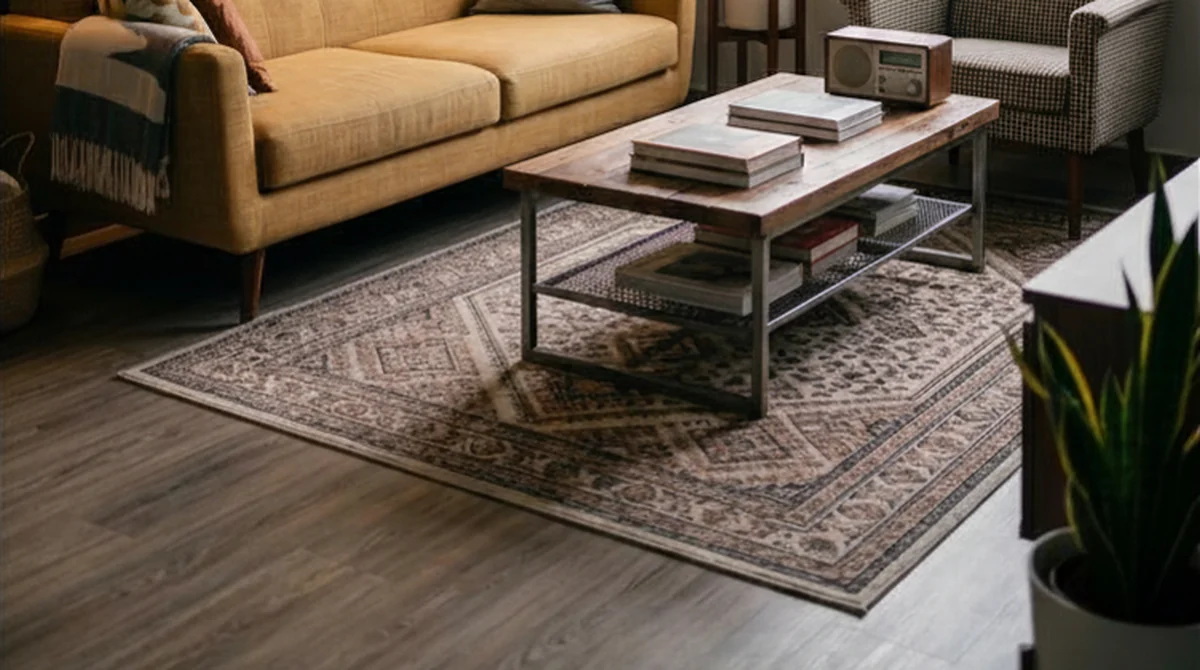
Both floors give you that warm, wood-look finish, and from across a room you might not tell them apart. Underneath, they are very different products. Engineered wood lays a real timber veneer over a plywood or HDF core, so what you walk on is genuine wood. Vinyl (LVT) prints and embosses a wood look onto a fully synthetic plank, so it is waterproof and stays put in any weather. We supply LVT, not engineered wood, so we have a stake here, and we will be straight about where each one earns its place. In Singapore the deciding factor is almost always the same: humidity. Here is how the two compare, honestly.
Engineered wood vs vinyl, factor by factor
Tap a factor to see the honest verdict for each floor
Humidity tolerance: the Singapore decider
How each floor copes with tropical damp and air-con swings
Authenticity & feel: where engineered wood earns its keep
Real timber underfoot versus a convincing wood look
Upkeep & scratches: living with the floor
Day-to-day care and how each handles knocks and grit
Cost & lifespan: what you pay, and for how long
Upfront price and how the floor holds up in this climate
Humidity is the Singapore decider
Everything about this comparison bends around one fact: Singapore is hot and humid all year, and most homes alternate between air-conditioned bedrooms and naturally damp living areas. Wood responds to that. Engineered wood is more stable than solid timber because its core is cross-layered plywood or HDF, but the surface and the core are still wood, so they take on and release moisture as the air changes. Over months and years that movement can show up as cupped boards, gaps opening at the joints, or planks lifting slightly at the edges. It is not a guarantee, and a tightly climate-controlled home fares better, but the risk is built into the material.
There is a sharper risk too. Engineered wood is not fully waterproof. A wiped-up splash is fine, but a burst pipe, an overflowing washer or a leaking aircon tray can swell the core and lift the veneer, and once that happens the planks usually have to come out. Vinyl is the opposite case. Our LVT is 100% waterproof through the whole plank, so it does not absorb water, does not swell and is not bothered by ambient humidity. If you want the honest one-line reason we fit vinyl rather than wood in Singapore, that is it. For a fuller view of waterproof options, our 2026 vinyl flooring buyer's guide lays out the range.
Authenticity versus practicality
This is where engineered wood has a genuine, undeniable edge, and we are not going to pretend otherwise. The top layer is real timber, so the grain, the warmth and the small variations from plank to plank are authentic in a way no print can fully replicate. If having actual wood underfoot matters to you, that is a real reason to choose it, and we would not talk you out of it.
The trade-off is everything that comes with real wood: it scratches, it marks, it dislikes standing water, and it asks for gentler cleaning and the occasional refinish. Vinyl flips the priorities. It will never be real timber, but modern LVT has come a long way, with high-resolution wood prints and embossed-in-register textures that read convincingly in a finished room. Our premium LN Korea series is the warmest and most natural-looking of our six series, and it is the one we point people to when they love the timber look but want it waterproof and low-maintenance. If you want that timber character in a more design-led layout, the herringbone vinyl format gives you a premium parquet-style look while staying fully waterproof.
So the question is less "which looks better" and more "do you want the real thing and the care it needs, or a realistic look that just works." For most HDB and condo homes, practicality wins. If you are choosing between vinyl formats rather than wood, our SPC vs LVT guide covers why we supply warm, quiet LVT.
Cost and lifespan
On price, vinyl is the cheaper floor, both to buy and to live with. Engineered wood typically costs more per square foot than mid-range vinyl, and the lifetime cost climbs once you add the careful maintenance, the moisture risk and the occasional refinish. Our own-brand LVT runs from S$3.20 per square foot for the Core series up to S$4.90 for the H Series herringbone, all supply and install, with a 25-year material warranty behind every series.
On lifespan, both can last a long time, but the conditions differ. Engineered wood lasts well in a stable, cared-for, climate-controlled home, and a quality veneer can even be sanded and refinished once or twice. Its weakness is exactly the Singapore weak point: humidity and water. Vinyl's lifespan is not tied to the climate, so it ages predictably whether the air is damp or dry. For a like-for-like sense of running costs over ten years, the cheaper-to-maintain floor is usually the better long-term buy in this climate.
| Factor | Engineered wood | Vinyl (LVT) |
|---|---|---|
| Humidity tolerance | Moves with humidity; not waterproof | 100% waterproof and stable |
| Authenticity & feel | Real timber veneer, genuine grain | Realistic printed wood look |
| Upkeep | Gentle cleaning; veneer marks easily | Low maintenance; damp mop and go |
| Scratch resistance | Real wood scratches and dents | 0.5mm wear layer resists scuffs |
| Cost (supply & install) | Higher than mid-range vinyl | S$3.20 – S$4.90 psf |
| Lifespan in SG | Long, but only in stable conditions | Long and climate-independent |
One honest note on what we carry. LN Flooring supplies its own-brand waterproof LVT vinyl and installs porcelain, ceramic and designer tile. We do not sell engineered wood, hardwood, parquet, SPC, laminate, carpet or vinyl sheet. If you love the warm timber feel but want it 100% waterproof and low maintenance, the closest match in our range is the premium LN Korea series. Every LN vinyl series is supply and install with a 25-year material warranty plus a 1-year workmanship warranty, from a BCA registered, bizSafe Level 3 contractor.
So which should you choose?
Choose engineered wood if having real timber underfoot is the point for you, and you have a stable, mostly air-conditioned home and the patience to maintain it. Choose vinyl if you want waterproofing, low upkeep, value and a wood look that holds up to Singapore's humidity without fuss, which describes most homes here. There is no wrong answer, only the right one for how you live.
Read next
See the full waterproof LVT range on our flooring page, including the warm-toned Korea series, or read the 2026 vinyl flooring buyer's guide to choose a series and format. If you want the premium timber look in vinyl, our herringbone vinyl guide is the next stop, and the SPC vs LVT comparison explains the vinyl options side by side. If wood is off the table and you are thinking about tile instead, our tiles page shows what we supply and install. When you are ready, send us your unit details for a per-room quote.