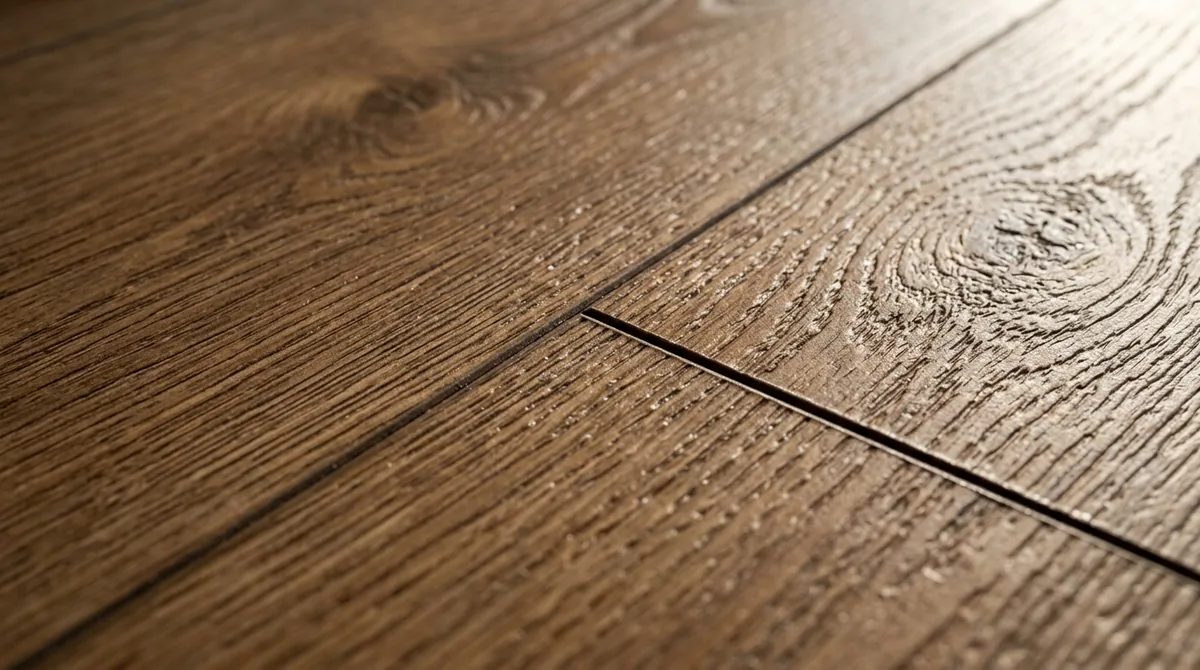
Texture decides more about how a vinyl floor lives than colour does. A smooth plank with a glossy coating shows scratches most and is slickest when wet. An embossed surface, with grain pressed into it, hides scuffs and grips better, though the deeper the texture, the more dirt its grooves hold. Stone-look vinyl is the tile-look version, laid in tile formats with micro-bevelled joints. Every wood-look series we sell is embossed. Our Urban Stone Series comes in matt and gloss finishes depending on the design.
In a shoes-off Singapore home, bare feet meet that surface every day, so it is worth choosing on purpose.
What does texture change on a vinyl floor?
A vinyl plank is a printed design under a clear wear layer. The print sets the look. Texture is the shape pressed into the surface, and it changes four things: how much a scuff shows, how much grip you have on a damp floor, how easily dirt lifts out, and whether the floor still looks real when you kneel down to it.
What texture does not change is how well the surface resists scratching. That is the job of the wear layer and its top coating, not the texture, and the wear layer is 0.5mm on every series we sell. Texture decides whether you notice the scratch.
How do the four textures compare?
Tap a texture. Ratings are our relative judgement from 1 to 5, not lab measurements.
Light emboss. Grain pressed lightly into the surface. It breaks up shine and fine scuffs and stays easy to mop.
In our range: LN Core Series, with embossed wood grain. Korea, Ultra and H Series are embossed wood-look planks too; feel a sample to judge their depth.
Why does smooth, glossy vinyl show scratches?
A smooth plank with a glossy coating reflects light evenly, the way a mirror does, so any scratch or scuff breaks the reflection and catches the eye from across the room. Water on a smooth surface sits as a thin film with nothing to break it, which is why smooth, glossy vinyl is the slickest when wet. Its one advantage is cleaning, because there is nowhere for dirt to hide.
Light or deep emboss: which is better?
Embossing presses a grain pattern into the surface, so light hits it at many small angles instead of one. The shine breaks up, fine scuffs disappear into the texture, and a bare foot has more to grip on a damp floor. It also feels closer to timber underfoot.
Neither is better outright, because depth is a trade-off. Deeper texture hides more and grips more, but its grooves hold more dirt, so a damp microfibre mop that reaches into the grain matters more than a quick dry sweep. Our vinyl cleaning guide has the routine.
All of our wood-look series are embossed. LN Core has an embossed wood grain, and LN N Series has a slightly deeper grain texture than Core. LN Ultra is embossed too, at 6.5mm; whether that extra thickness is worth having is a separate question, answered in our flooring thickness guide.
You will also see "embossed in register" on the market. It means the pressed grain follows the printed pattern, so the knots you see are the knots you feel. If a sample is sold that way, run a fingertip along a printed knot or grain line: the texture should follow it.
What does a stone-look surface do?
Stone-look vinyl does not try to copy grain. Our LN Urban Stone Series comes in marble-, cement- and terrazzo-effect designs, laid in tile formats, in matt and gloss finishes depending on the design. Matt keeps glare down and hides fine scratches and water spots better than gloss, and a busy marble or terrazzo pattern hides more than a plain cement look.
On the matt designs, the low sheen makes our marble-look vinyl read like a honed stone rather than a glossy print. Urban Stone is also the series we suggest for a dry kitchen, for reasons our kitchen vinyl guide sets out.
Do bevelled edges matter?
They change how the whole floor reads. A micro-bevel is a tiny chamfer along the top edge of a plank. Where two bevelled planks meet, they form a shallow V that reads as a defined joint, so each plank looks like a separate board, the way real timber does. Square-edged planks meet flush, and the floor reads more like one continuous print.
LN Korea Series and N Series planks have four-sided micro-bevelled edges, and Urban Stone has micro-bevelled edges on its tile formats so the joints read like real tile joints. The small V does collect dust, which the same damp mop lifts out.
How do you judge texture before you buy?
By hand and in low-angle light, not on a screen, because a photo flattens texture completely. Hold a sample near a window so the light rakes across it: embossing shows as fine shadow, smooth print as shine. Then run a damp fingertip over it, and if you can, stand on it barefoot, which is how you will meet it at home.
Colour still matters, and our vinyl colours guide covers it. Colour decides what shows on a floor; texture decides how much of it shows. We bring samples to the free site visit so you can test both in your own light, and the full range is on our flooring page.
Read next
- Choosing a vinyl flooring colour, and what each tone shows
- How to clean vinyl flooring, the routine that keeps the wear layer looking new
- 5mm vs 6mm vs 7mm vinyl, and why thickness is not durability
- Pet-friendly flooring, where grip matters most
Common Questions
Embossed vinyl has a texture pressed into its surface, usually a wood grain you can feel with your fingertips. The texture breaks up shine, hides fine scuffs and gives more grip than a smooth surface, especially when the floor is damp. Every wood-look vinyl series we sell is embossed. Embossing is about the surface only; durability comes from the wear layer underneath.
For most homes, matt. A glossy surface reflects light evenly, so every scratch, scuff and footprint breaks the shine and shows, and it is slicker when wet. A matt or textured surface hides those marks and gives more grip. Gloss is easier to wipe because there is no texture to hold dirt, but in a busy Singapore home that rarely outweighs the rest.
A little. Deeper texture holds more fine dirt in its grooves than a smooth surface does, so a damp microfibre mop that reaches into the grain works better than a dry sweep alone. Light embossing makes very little difference to cleaning. Bevelled joints collect some dust too, which the same damp mop lifts out.
Yes. Embossed grain or a matt stone-look surface gives a bare foot more to grip when the floor is damp, while water on a smooth, glossy plank sits as a slick film. Texture is not a reason to leave a floor wet, though: wipe spills as they happen, and keep genuinely wet areas such as bathrooms tiled.
No. Scratch resistance comes from the wear layer and its top coating, not the texture. The wear layer is the clear protective film over the print, and it is 0.5mm on every series we sell. Texture changes how visible a scratch is: on an embossed or matt surface, fine marks get lost in the grain, while on a smooth, glossy surface they catch the light. So texture helps a floor look newer for longer without making it harder.
It is a market term for embossing that follows the printed pattern, so the grain you feel lines up with the grain you see, knots included. Ordinary embossing applies a general grain texture that does not track the print line for line. To check a sample sold as embossed in register, run a fingertip along a printed knot and feel whether the texture follows it.
Want to feel the difference?
Texture is easier to judge with your hand than on a screen. Ask Kayler to have embossed and matt samples brought to your free site visit, and test them in your own light.
WhatsApp Kayler or call Kayler on +65 8118 5520