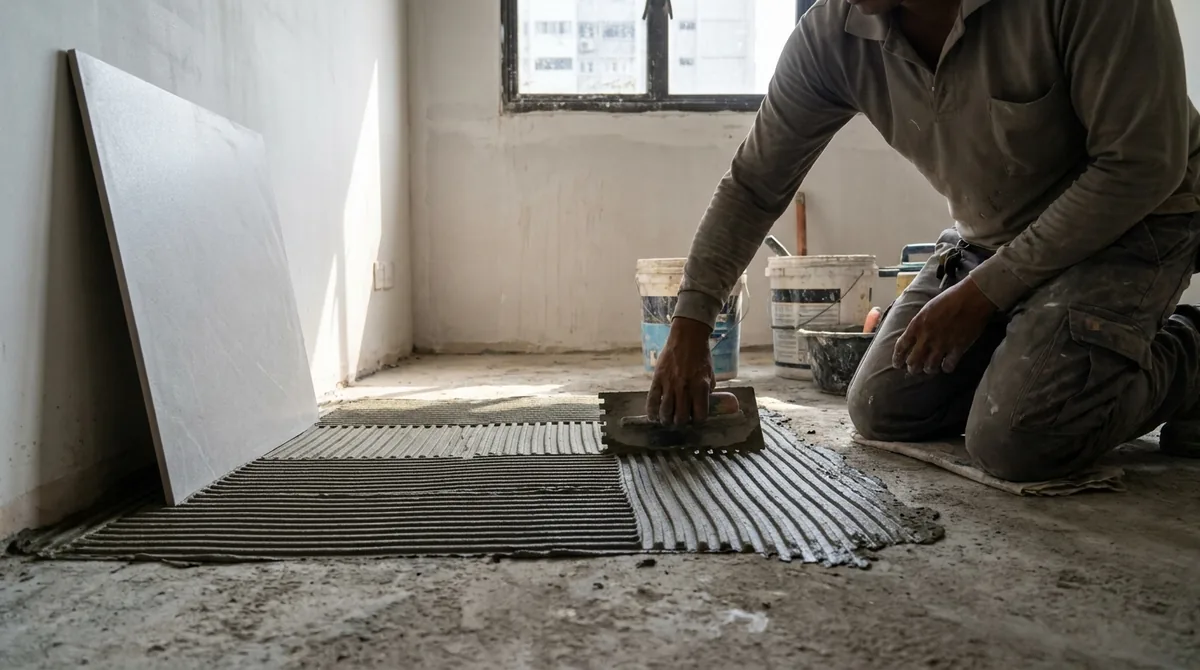
Almost everything that decides whether a tiled floor lasts happens before the first tile goes down, and none of it is visible afterwards. That is the awkward truth about floor tiling, and it is why two quotes for the same room can differ by thousands of dollars while looking identical on paper. This is what the job actually involves, written by a BCA registered contractor who lays tile across Singapore homes, and what to ask before you sign anything.
What a floor tiling job actually involves
Laying tile is the short part. A full floor tiling job in a Singapore property runs through six stages, and only one of them is the bit people picture.
| Stage | What happens | Why it matters |
|---|---|---|
| Hacking | The old floor finish and its bedding are removed and carted out. | Noisy, restricted to weekday hours in HDB flats, and the stage that sets your schedule. |
| Substrate prep | The exposed base is cleaned, repaired and levelled, often with a screed. | Tile follows whatever is underneath. A floor laid on an uneven base will show it at every joint. |
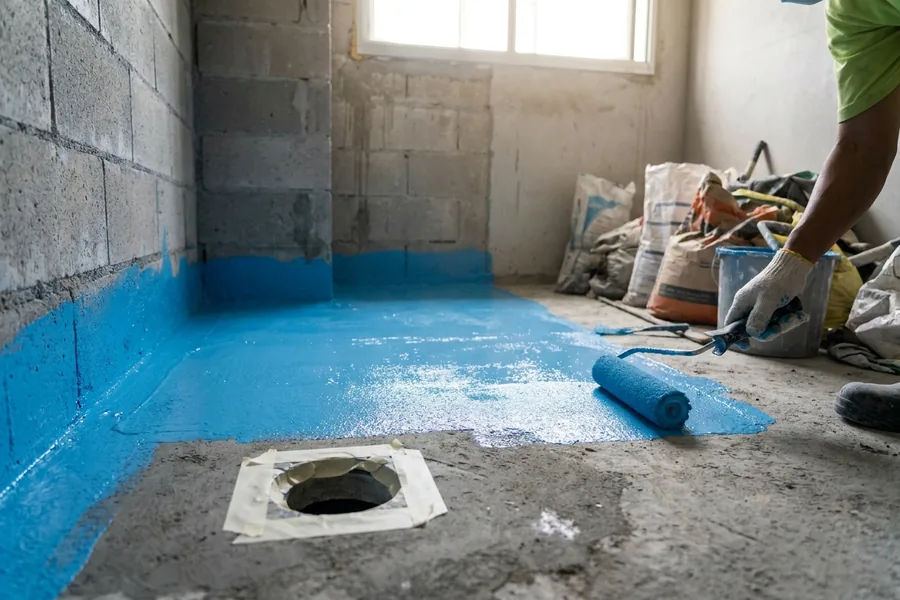
| Waterproofing | A liquid membrane is applied and cured in wet areas, then usually tested. | The single most expensive thing to get wrong, because the damage appears in the unit below. |
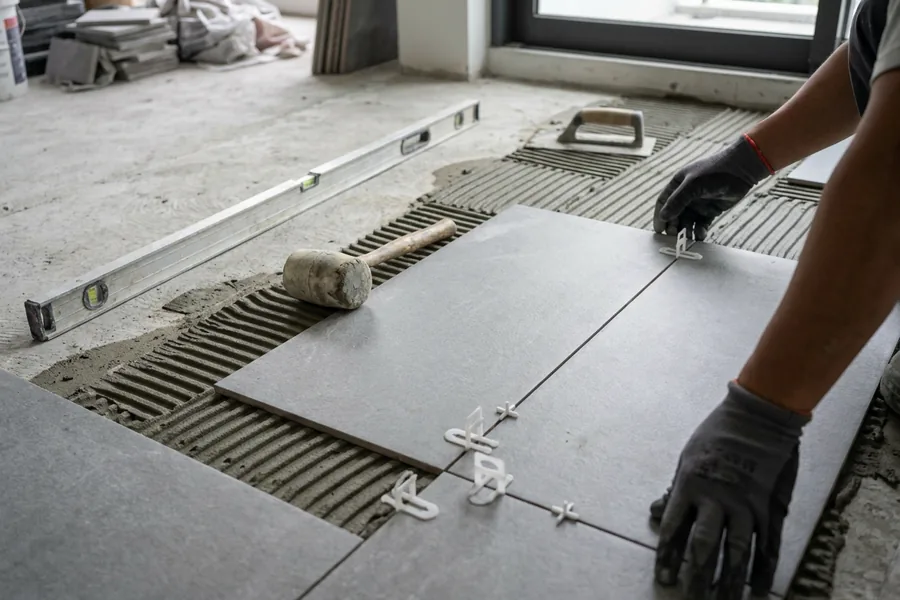
| Laying | Tiles are set into adhesive, spaced and levelled, and cut around fixtures. | The visible craft. Cuts around drains, door frames and corners are where skill shows. |
| Grouting | Joints are filled, cleaned back and the perimeter is sealed. | Grout colour changes the look of a floor more than most people expect. |
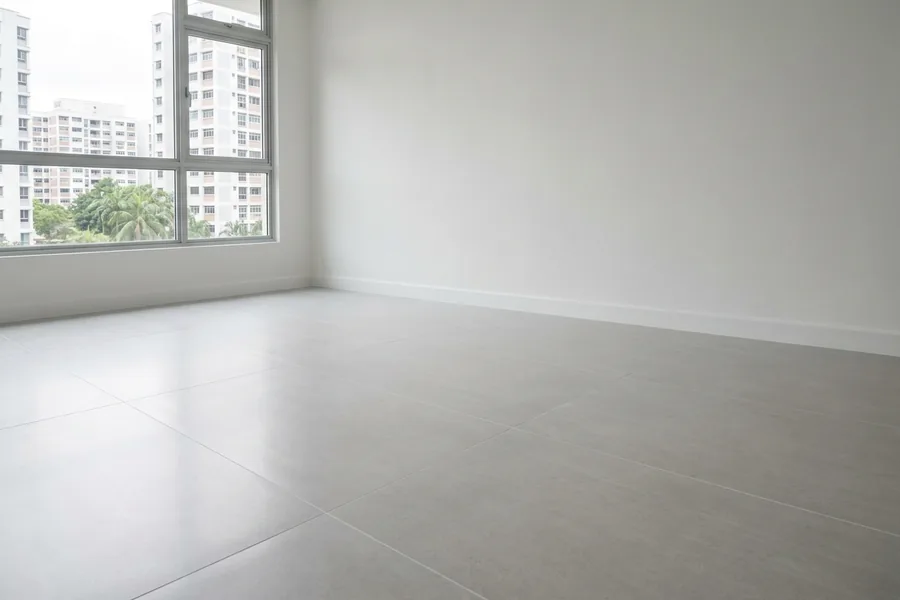
| Curing | Adhesive and grout are left to set before the floor takes traffic. | Skipped constantly. Tiles walked on too early are tiles that loosen later. |
The three stages a cheap quote skips
When a tiling quote comes in noticeably under the others, it is rarely because the labour is cheaper. It is usually because something in the list above has quietly been left out. Three stages account for most of it.
Substrate preparation. Levelling an uneven base takes time and material, and it is entirely invisible once tile covers it. Laying straight onto a poor base is faster, cheaper, and produces lippage, hollow spots and joints that do not line up.
Waterproofing. A proper membrane in a wet area is applied in coats, taken up the wall by a sensible height, dressed into the floor waste, and given time to cure before anything is laid over it. Each of those steps costs time. Skipping any of them is undetectable on handover day and expensive eighteen months later.
Curing time. This one costs nothing but days, which is exactly why it gets compressed. A contractor juggling three jobs has every incentive to grout early and hand over early.
None of these three can be inspected once the floor is finished. That is the whole problem with buying floor tiling on price alone: the parts you are paying extra for are the parts you will never see.
Is this tiling quote complete?
Tick everything your quote actually itemises, not what you assume is included.
How to screen a tiling contractor
Most of choosing a tiling contractor in Singapore is screening out the ones who should not be on your shortlist. Four checks do most of the work, and all four are verifiable rather than a matter of trust.
- Registration you can check. For HDB work the renovation permit must be applied for by an HDB-registered renovation contractor. Beyond that, ask for BCA registration and a bizSafe level and verify them yourself. LN Contractor Pte. Ltd. is BCA registered and bizSafe Level 3 certified.
- A quote that itemises stages. If hacking, preparation, waterproofing and laying are collapsed into one line, you cannot compare it against anything, and neither can you tell what has been left out.
- A named tile. The tile should appear on the quote by series, size and finish. "Tiles supplied" is not a specification, and it leaves room for a different tile to arrive on site.
- A written scope for wet areas. Ask specifically how the waterproofing is done, how high it goes up the wall, and how long it is left to cure. A contractor who does it properly will answer immediately.
One more, less obvious: ask who is actually doing the work. Tiling is frequently sub-contracted, which is not automatically a problem, but it changes who you can hold responsible. LN uses its own installation crew, and the person quoting you is from the same company as the person laying the floor.
Wet areas, and the part that decides everything
If your job includes a bathroom, a service yard or a kitchen, waterproofing is the most consequential line on the quote. Water that gets past a floor in a Singapore flat does not stay in your flat. It appears on a neighbour's ceiling, and the conversation that follows is with them and with your management or town council rather than with your contractor.
Done properly, the membrane is applied to a prepared substrate in more than one coat, carried up the surrounding walls, dressed carefully into the floor waste and any pipe penetrations, then left to cure and ideally ponded before tiling starts. That sequence is the reason a bathroom takes longer than a bedroom of the same size.
If your flat is a new HDB unit, there is a further consideration: the original bathroom waterproofing carries a limited cover period after handover, and hacking the bathroom floor within the first three years generally forfeits it. We cover that in detail in our guide to HDB tiles.
Tiling over an existing floor, and when it works
Laying new tile over an existing tiled floor avoids the noisiest, dustiest and most permit-sensitive stage of the job. It is a real option, but a narrower one than it is often sold as. It works when the existing tiles are firmly bonded with no drummy spots, the floor is flat, there is enough clearance at doors and thresholds to absorb the added height, and the area is dry.
It does not work in a wet area, because the waterproofing needs to sit on a prepared substrate rather than on top of an old finish. And it never works as a way of dealing with a floor that is already failing, since covering a loose tile does not make it tight.
Where hacking is unattractive but tiling over is unsuitable, there is a third route worth knowing about: a vinyl overlay goes over a sound existing floor in about a day, with no hacking. That is a different product with different trade-offs, and we have set them side by side in vinyl flooring versus tiles.
What floor tiling costs, and why we quote per project
We do not publish a rate per square foot for tile, and we would treat any contractor who does with some caution. The tile itself varies several times over between a basic homogeneous tile and a large-format porcelain. The labour depends on how much hacking, levelling and waterproofing the property actually needs, and that is not knowable until someone has looked at the floor.
What we can tell you is where the money goes. On a typical hack-and-relay job the tile is rarely the largest line. Hacking and disposal, preparation and waterproofing together usually outweigh it, which is precisely why the quotes that skip those stages look so attractive.
We buy tile through Hafary and Soon Bee Huat on a contractor account and pass that pricing through rather than marking it up, so the tile line on our quote is close to what the trade pays. Send Kayler your property type and the rooms involved and you will get a supply-and-install estimate the same day, after a free site visit.
One thing tile does not come with
Tile carries no product warranty. Standard tiles from Singapore suppliers are sold without one, and LN is the installer rather than the manufacturer, so there is nothing for us to pass through to you. If a contractor offers you a tile warranty, ask who is underwriting it.
What we do warrant is our own work: one year on installation workmanship. Our 25-year material warranty is specific to our LVT vinyl range and does not extend to tile. We would rather set that out here than have you discover it during a dispute.
Read next
- HDB tiles, covering permits, hacking hours and the three-year bathroom rule
- Homogeneous versus porcelain tiles, including the anti-slip ratings a wet area needs
- Floor tile sizes and formats, and how large-format tile changes a room
- Our tile supply and installation service
Common Questions
Floor tiling is quoted per project rather than at a published rate per square foot. The tile itself can vary several times over between a basic homogeneous tile and a large-format porcelain, and the labour depends on how much hacking, levelling and waterproofing the floor actually needs before anything is laid. A quote given over the phone without anyone seeing the floor is a guess. WhatsApp Kayler at +65 8118 5520 with your property type and the rooms involved, and you will get a supply-and-install estimate the same day. The site visit is free.
For a typical HDB flat, allow about five to seven working days for a hack-and-relay job. That covers hacking and disposal, substrate preparation and levelling, waterproofing where wet areas are involved, laying, then grouting and cleanup. Curing time is the part people forget: adhesive and grout both need to set before the floor takes traffic, and rushing that stage is what produces loose tiles a year later. In an HDB flat the noisy stages are also restricted to weekdays, so weekends do not count toward the schedule.
For HDB work, yes. The renovation permit has to be applied for by an HDB-registered renovation contractor rather than by you directly. Beyond that requirement, BCA registration and a bizSafe level are worth checking because they are verifiable rather than self-declared. LN Contractor Pte. Ltd. is BCA registered and bizSafe Level 3 certified. Ask for the registration details and check them yourself rather than taking a logo on a quote at face value.
Sometimes, but it is not the default answer. Tiling over adds height and weight, raises the floor against door frames and thresholds, and only works where the existing tiles are sound, flat and firmly bonded. It also covers whatever is wrong underneath instead of correcting it. A drummy tile sealed beneath a new floor becomes an expensive problem later. We tap-test the existing floor at the site visit and say which route the property actually needs.
Homogeneous tile carries the same body and colour the whole way through, so a chip is far less visible, which is why it is common in high-traffic and commercial areas. Porcelain is dense and low in water absorption, and typically carries a printed surface layer that allows a much wider range of looks including stone and concrete effects. For a Singapore wet area the more useful question is the anti-slip rating rather than the category name.
No. Tiles are sold without a product warranty, and LN is the installer rather than the tile maker, so there is nothing to pass through to you. Anyone offering a tile warranty is describing something the industry does not provide. LN's 25-year material warranty applies to our LVT vinyl range only, alongside a one-year workmanship warranty on installation. We would rather state that plainly than let you find out later.
They solve different problems. Tile is harder wearing, cooler underfoot and the correct answer for bathrooms, kitchens and service yards, but it needs hacking or a screed and takes days rather than one. Vinyl overlay goes over a sound existing floor in about a day with no hacking, and LN's LVT runs S$3.20 to S$4.90 per square foot supplied and installed. We fit both, so we have no reason to push you either way.
Getting tiling quotes? Send us the other one
Send Kayler your property type and the rooms involved. We will tell you what a complete quote should include, whether your floor needs hacking, and what it will cost. Free site visit, no hard sell.
WhatsApp Kayler or call Kayler on +65 8118 5520