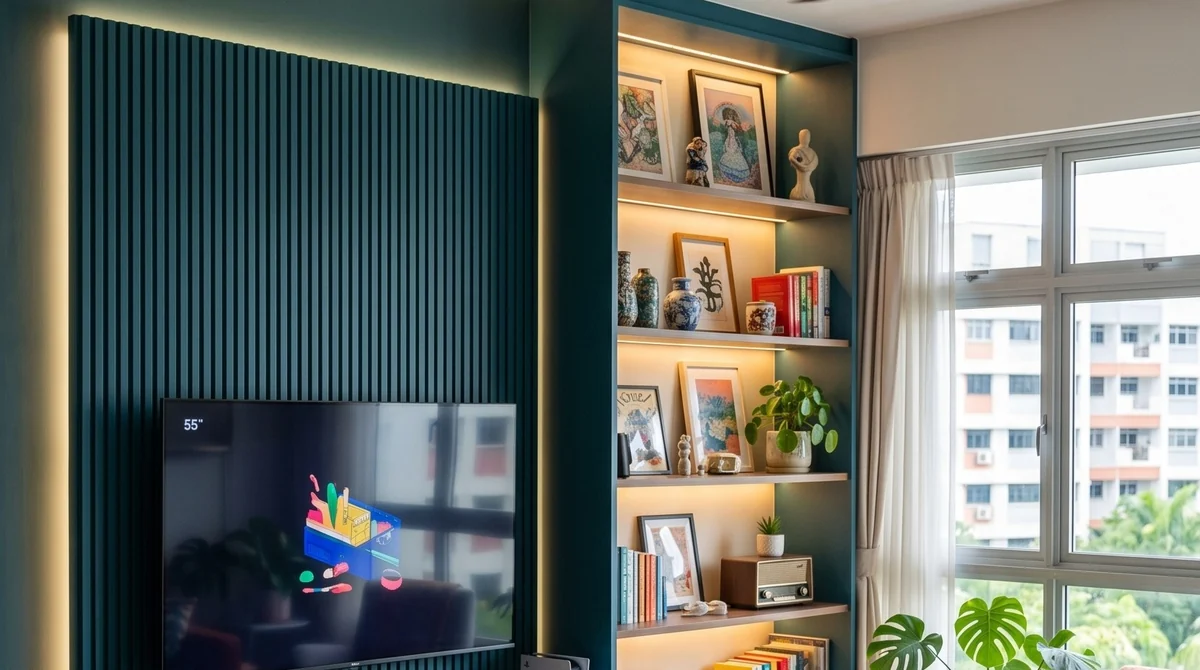
Two things decide whether a panelled wall still looks right in five years, and only one of them is visible in a showroom. The profile is what you choose with your eyes. The core is what you are actually buying, and in Singapore humidity it is the one that settles how long the wall lasts.
The four profiles, and what each is for
| Profile | What it looks like | Suits |
|---|---|---|
| Fluted | Regular rounded or squared ribs, shallow, close together. | The default. Reads as texture rather than as a statement, so it works on a large wall without dominating. |
| Slat | Deeper battens with a visible shadow gap between them. | Stronger shadow lines. Good behind a TV, because the gaps swallow cables and bracket edges. |
| 3D | Sculpted or wave profiles with a varying face. | A genuine focal point. Best used on one wall in a room and nowhere else. |
| Cladding | Flat or lightly textured boards, minimal relief. | Where you want a material change rather than a pattern, for example a stone or concrete look. |
A practical note that is easy to miss: deeper profiles collect more dust in the grooves, and light rakes across them more dramatically. In a room with a large window on one side, a deep slat wall will look very different at 9am and 5pm. That is usually the point, but it is worth seeing a sample against your own wall before committing.
The range we fit: Vellera, four series
Twenty-six finishes. Groove fluted battens at 2800×168×23mm, Element and Linear large-format sheets at 2600×950×4mm, and Compact flat tile at 610×305×5mm. A few of them:




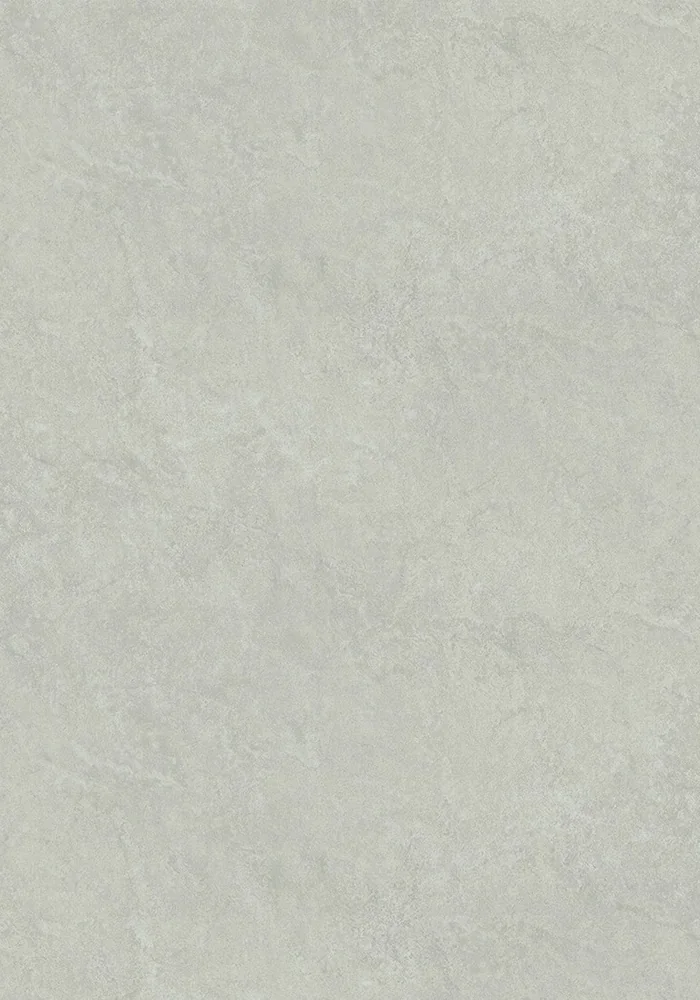
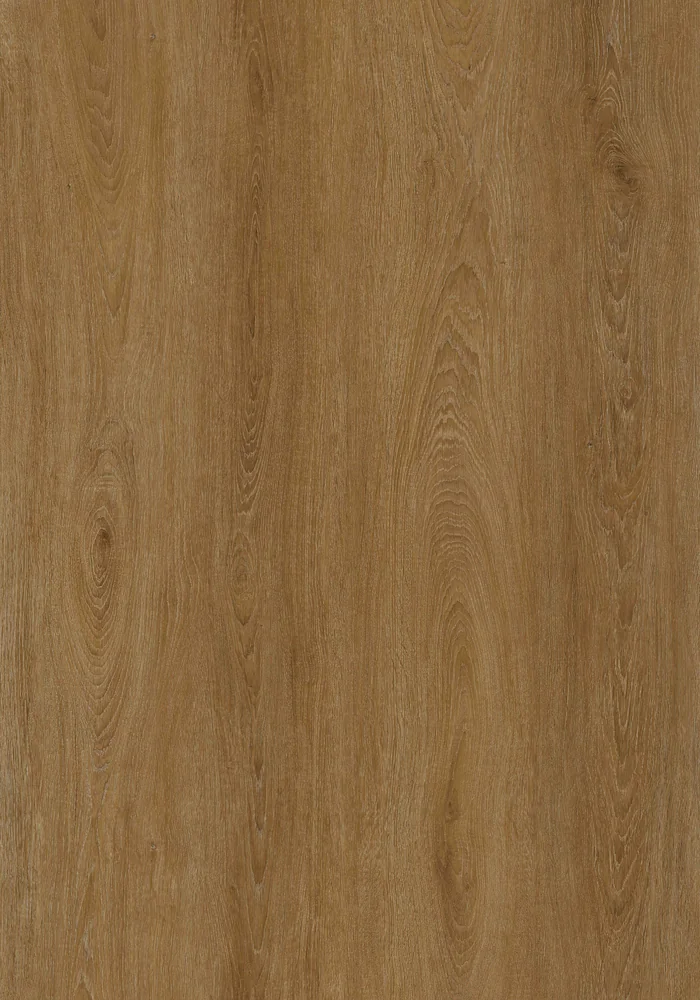
See all twenty-six finishes — tap any one for the detail and a quote naming it.
The core is the part that matters here
Panels sold in Singapore come with three broad cores, and they behave very differently in our climate.
SPC is a stone-plastic composite: mineral filler in a PVC matrix, so there is no wood content at all. The catalogue puts it at 1.15 g/cm³ and formaldehyde-free, which is the tell. MDF sits nearer 0.75 g/cm³ and is a formaldehyde source, because the resin binding the fibres is where it comes from.
PVC composite is denser still and has no wood content at all. You will see it sold as carbon crystal board or bamboo charcoal board. Those are trade names for high-density PVC composite, not separate materials, and it is worth knowing that before you pay a premium for the label.
MDF is the one to avoid, and it is common because it is cheap and takes a convincing veneer. MDF has an absorbent core. Once moisture reaches a cut edge, the core swells and the face lifts. In a Singapore flat there are plenty of routes for that: a wall shared with a bathroom, an air-conditioner drip, a mop, a spill against a skirting.
We fit SPC and PVC composite only. Not because MDF cannot look good on day one, but because we would be back looking at a lifted edge, and we are the ones who would have to explain it.
How they actually go on
Panels are fitted over an existing sound, level wall. There is no hacking and no wet trade, which is why a single feature wall is usually a one-day job rather than the week a stud-and-board false wall takes.
The parts that separate a good fit from a cheap one are the edges: how the panel meets the ceiling and the skirting, how external corners are handled, and how cuts around sockets and switches are made. Those are the details worth looking at in someone's completed work, more than the panel itself.
The wall does need to be sound and reasonably flat first. Panels follow whatever is behind them, the same way flooring does.
Where we decline
Inside the unit only. Common corridors, lift lobbies and staircases are escape routes with a strict surface flame-spread requirement, and balconies and external walls fall under external-cladding rules. We do not fit combustible panels in either case.
Which profile suits the room?
Pick the room and we will say which way we would lean.
Fluted, usually
A living room wall is large and viewed from across the room, so a shallow fluted profile gives texture without shouting. Slat works well specifically behind a TV, where the shadow gaps earn their keep.
See a sample against your own wall before choosing depth. Side light changes a deep profile dramatically through the day.
Slat behind the bed
A headboard wall is seen up close and from a low angle, which flatters deeper profiles. It is also a dry, low-traffic wall, so the material choice is easy.
Run it full height where the ceiling allows. A panel that stops short of the ceiling reads as a headboard rather than a wall.
Composite only, and mind the edges
A wall shared with or adjacent to a bathroom is exactly where an MDF core fails. SPC and PVC composite have no absorbent core, so they tolerate the humidity.
This is the case that settles the material question. We would not fit MDF anywhere, and certainly not here.
We will not quote it
Corridors, lift lobbies and staircases are escape routes with a flame-spread requirement. Balconies and external walls fall under external-cladding rules.
Inside the unit only. If another contractor quotes it, ask which standard they are working to.
Read next
- Our fluted and slat panel page, with profile diagrams
- TV feature walls, and the cable decisions that come first
- Feature wall design, room by room
- What wall panels cost
Common Questions
Fluted panels have regular, relatively shallow ribs set close together, so they read as texture across a large wall. Slat panels use deeper battens with a visible shadow gap between them, giving stronger shadow lines and more depth. Slat is the better choice behind a TV, because the gaps conceal cable drops and the edge of a bracket where a shallower profile would not.
SPC and PVC composite panels are, because neither has an absorbent wood core. MDF-core panels are not, and they are common because they are cheap and take a convincing veneer. Once moisture reaches a cut edge on an MDF panel the core swells and the face lifts, and in a Singapore flat there are plenty of routes for that. LN fits SPC and PVC composite only.
Both are trade names for high-density PVC composite panels rather than separate materials. They are perfectly good panels, but it is worth knowing what you are buying before paying a premium for the label rather than the specification. Ask for the core material and the density, not the marketing name.
No. Panels are fitted over an existing sound, level wall, which is the main practical advantage over building a stud-and-board false wall. There is no hacking, no wet trade and very little dust, so a single feature wall is usually a one-day job rather than a week. The existing wall does need to be sound and reasonably flat first, because panels follow whatever is behind them.
Composite panels tolerate humidity, so a wall adjacent to a bathroom is not a problem. Inside a shower enclosure is a different question and we would generally use tile there instead, because a wet area needs a waterproofing membrane on a prepared substrate rather than a surface finish over an existing wall.
No, and this is one we decline rather than quote. Balconies and external walls fall under external-cladding rules, and common areas such as corridors, lift lobbies and staircases are escape routes carrying a strict surface flame-spread requirement. We fit panels inside the unit only.
No. LN's 25-year material warranty covers our LVT vinyl flooring only and does not extend to wall panels. We warrant our own installation workmanship for one year. We would rather set that out plainly here than have you find it out during a dispute.
Want to see the profiles in person?
Send Kayler the room and a photo of the wall. We will bring samples to the site visit so you can see how the profile catches your own daylight before you commit. Free, no hard sell.
WhatsApp Kayler or call Kayler on +65 8118 5520