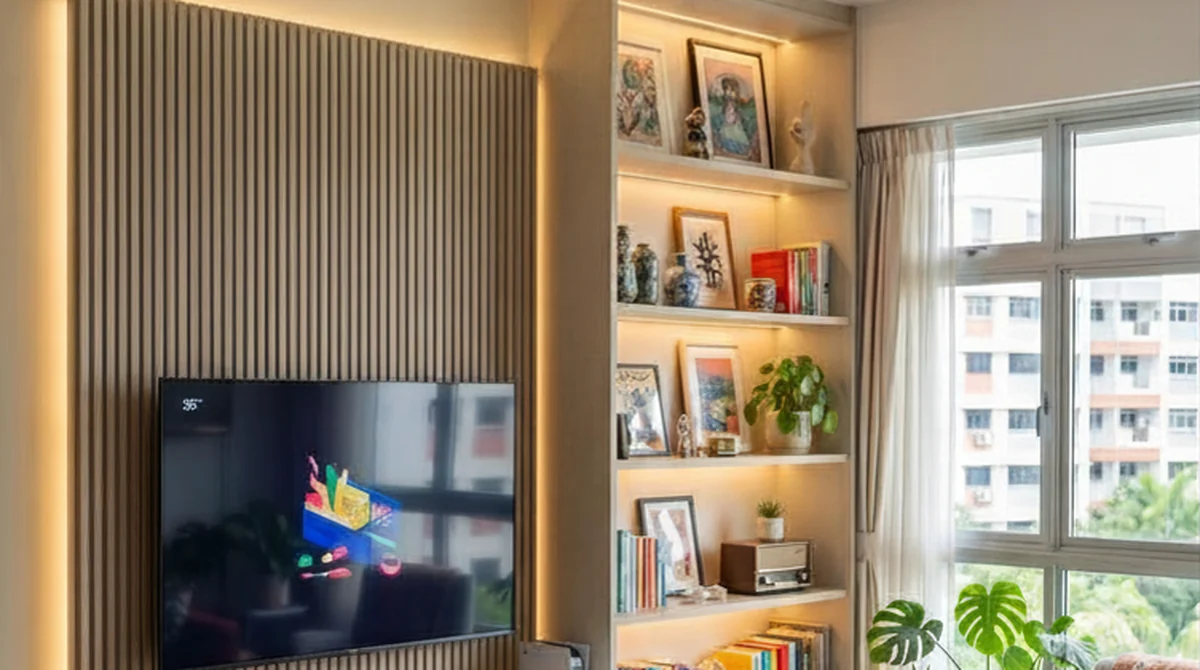
A TV feature wall is one of the few renovation jobs where the order of operations matters more than the material. Panels go up quickly and look good immediately. The two things that will annoy you for years, where the cables run and what the TV bracket is fixed into, have to be settled before any of that happens. After the panels are on, both become a demolition job.
Decide the cables first, not last
Once a panelled wall is up, running a new HDMI cable means taking panels off. So the sequence we work to is: agree the TV position, agree the console position, run the conduit, then panel.
There are three routes, and they cost different amounts of trouble.
| Route | How it works | Worth knowing |
|---|---|---|
| Behind the panel | Cables run in the cavity created by the panel's own depth, from the screen down to the console. | Cleanest look. Needs the drop agreed before fitting, and a service loop left at both ends. |
| Surface conduit | A trunking run fixed to the wall, then panelled over. | Easier to re-pull a cable later. Adds a little depth to the build-up. |
| Into the wall | Chased into the masonry itself. | Most permanent, and the most disruptive. In an HDB flat, chasing is noisy work restricted to weekday hours. |
Leave more slack than you think you need at the screen end. A TV replaced in five years is rarely the same size, and its ports are rarely in the same place.
What the bracket actually fixes into
This is the question we get asked least and should be asked first. A wall panel is a finish. It is not a structural fixing point, and a heavy screen hung off panel material alone will eventually sag or pull out.
The bracket has to reach the wall behind. That means either fixing through the panel into the masonry with the correct fixings and a spacer to take the load, or setting a backing plate into the build-up at bracket height before the panels go on. Either works. Deciding after the fact does not.
Tell us the screen size and weight at the site visit and we will set the backing accordingly. It costs nothing at that stage.
Fluted, slat, or flat behind a screen
A television is a large black rectangle, and the wall behind it either competes with that or frames it. In practice, vertical profiles work best: fluted and slat both run the eye up and down, which makes the horizontal screen sit more comfortably.
Deep slat profiles have one specific advantage behind a TV. The shadow gaps swallow cable drops and the edge of a bracket in a way a flat surface cannot. A flat panelled wall shows every fixing.
The full material comparison, including why we do not use MDF-core panels in Singapore humidity, is on our fluted panel page.
The range we fit: Vellera, four series
Twenty-six finishes. Groove fluted battens at 2800×168×23mm, Element and Linear large-format sheets at 2600×950×4mm, and Compact flat tile at 610×305×5mm. A few of them:
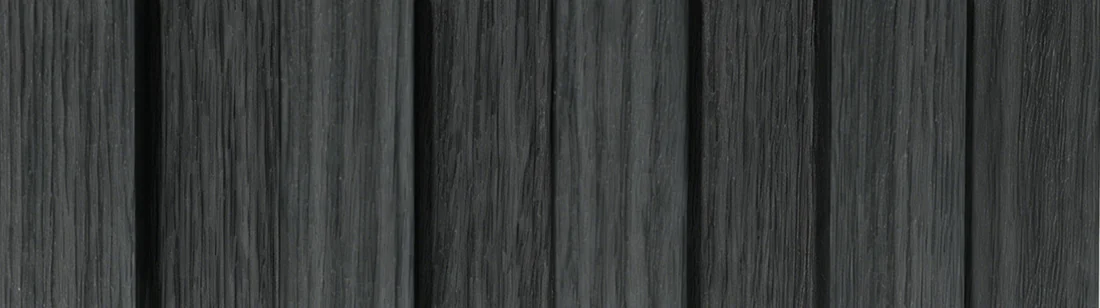
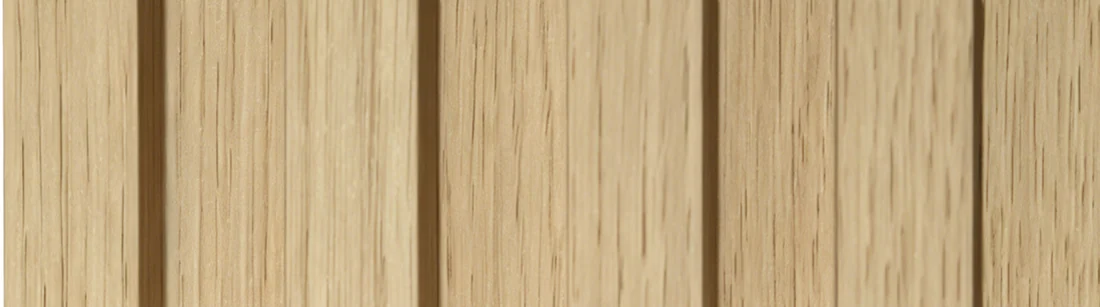



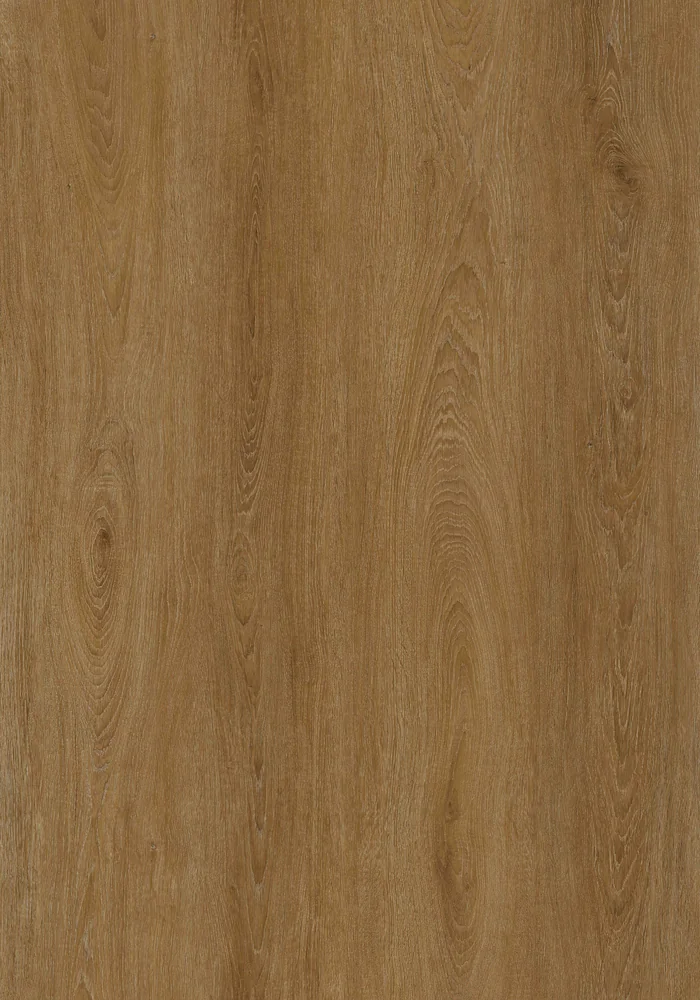
See all twenty-six finishes — tap any one for the detail and a quote naming it.
Why panelling beats building a false wall
The traditional way to get a feature wall was carpentry: a stud frame, boards, filler, sanding, painting. It works, and it takes about a week with wet trades and dust throughout.
Panels go straight onto a sound, level existing wall. No hacking, very little dust, and a single feature wall is usually a one-day job by the same crew that lays our floors. You also lose far less of the room, which in an HDB living room is not a small thing.
Where we will not fit them
Inside the unit only. We do not panel common corridors, lift lobbies or staircases, which are escape routes with a strict surface flame-spread requirement, and we do not fit combustible panels to balconies or external walls, which fall under external-cladding rules. If someone quotes you for either, ask them which standard they are working to.
Where is your TV going?
The wall you pick changes what the job involves.
The straightforward case
A solid masonry wall takes both the panels and the bracket load without any special preparation. Cables can run behind the panel build-up or in chased conduit, whichever you prefer.
Usually a one-day job. Bring us the screen weight and we will spec the fixings at the site visit.
Workable, but the backing matters
A partition wall will not hold a heavy screen off plasterboard alone. We set a backing plate into the build-up at bracket height before panelling, so the load goes into something solid.
Tell us the screen size early. The backing has to go in before the panels, not after.
Depends what is already there
Panelling over an existing painted or skim-coated feature wall is usually fine if the surface is sound and level. Over existing tile or a flaking finish, the substrate has to be dealt with first.
We check this at the site visit. Panels follow whatever is underneath them, the same as flooring does.
We decline this one
Balconies and external walls fall under external-cladding rules, and we do not fit combustible panels there. This is not a capacity question, it is a fire-code one.
Ask any contractor who does quote it which standard they are working to, and get the answer in writing.
Read next
- Our fluted and slat panel page, with the material comparison
- Fluted wall panels, and how the profiles differ
- Feature wall design, room by room
- What wall panels cost, and what drives the number
Common Questions
We quote per project rather than at a published rate, because the cost depends on the wall area, the panel profile and material, and what is already on the wall. A single TV feature wall in a typical HDB living room is usually a one-day fit. Send Kayler the wall dimensions and a photo on WhatsApp at +65 8118 5520 and you will get an estimate the same day. The site visit is free.
Yes, but the bracket has to reach the wall behind rather than fixing into the panel itself. A wall panel is a finish, not a structural fixing point, and a heavy screen hung off panel material alone will eventually sag or pull out. We either fix through to the masonry with the correct fixings and a spacer, or set a backing plate into the build-up at bracket height before the panels go on. Tell us the screen size and weight at the site visit and it costs nothing to allow for.
There are three routes. Cables can run in the cavity created by the panel depth, in surface trunking that is then panelled over, or chased into the masonry. All three have to be decided before the panels go up, because afterwards adding a cable means removing panels. Leave a generous service loop at the screen end: a TV replaced in five years is rarely the same size and its ports are rarely in the same place.
A single feature wall in a typical HDB living room is usually a one-day job. Panels are fitted over a sound, level existing wall, so there is no hacking, no wet trades and very little dust. That is the main practical advantage over building a stud-and-board false wall, which takes about a week with dust throughout.
Both work, and both suit a screen better than a flat panel does, because the vertical profile makes a horizontal screen sit more comfortably. Deep slat profiles have one specific advantage: the shadow gaps swallow cable drops and the edge of a bracket, where a flat panelled surface shows every fixing.
No, and this is one we decline rather than quote. Balconies and external walls fall under external-cladding rules, and common areas such as corridors, lift lobbies and staircases are escape routes carrying a strict surface flame-spread requirement. We fit panels inside the unit only.
No. LN's 25-year material warranty covers our LVT vinyl flooring only and does not extend to wall panels. We warrant our own installation workmanship for one year. We would rather set that out plainly here than have you find it out during a dispute.
Planning a TV wall? Send us the wall
A photo of the wall, rough dimensions and your screen size is enough for an estimate. We will tell you where the cables should run and what the bracket needs, before anything goes up. Free site visit, no hard sell.
WhatsApp Kayler or call Kayler on +65 8118 5520