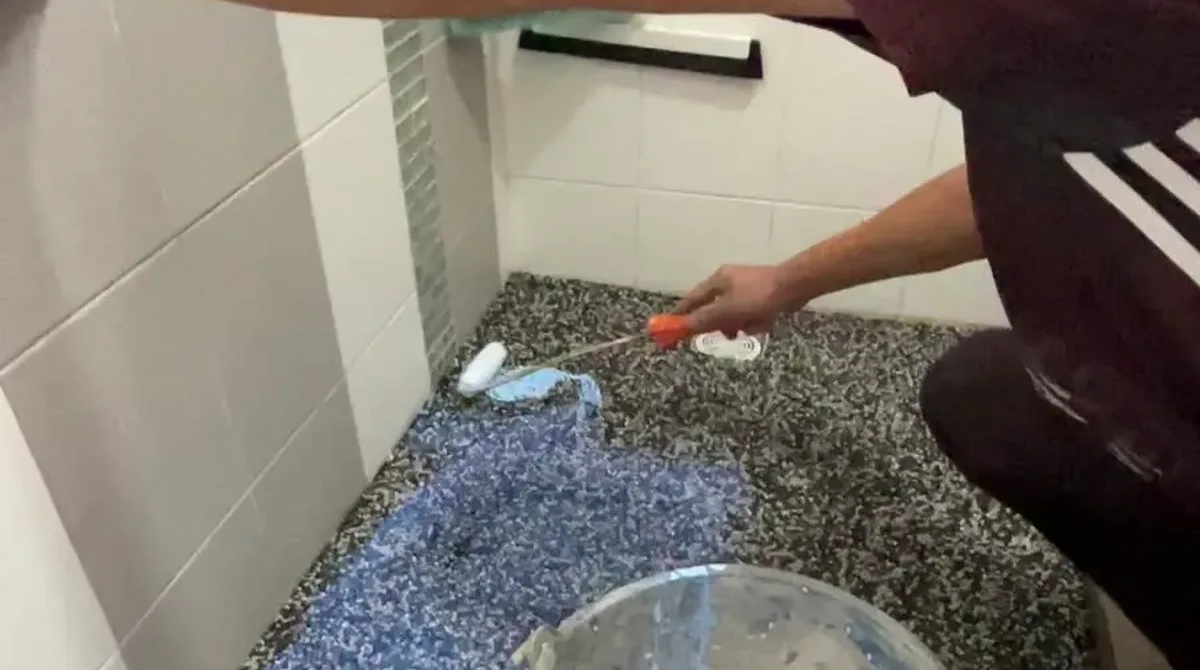
Toilet waterproofing is the membrane under your bathroom tiles that keeps water off the concrete slab and out of the flat below. Tiles and grout do not do that job on their own. When it fails, HDB's recommended fix is to hack out the tiles, re-lay the screed and membrane, and retile. Some leaks start at the floor trap and can be repaired there. Retiling an HDB bathroom needs a renovation permit, and the membrane must turn up at least 150mm against the walls, kerbs and pipes.
What does toilet waterproofing actually do?
Think of the membrane as a shallow tray hidden under the floor. HDB's guidelines for a bathroom floor ask for a pre-packed waterproofing screed and a waterproofing membrane before any new finish goes on, with the membrane turned up the walls, kerbs and pipes. Water that gets past the tiles and grout lands on that tray and runs to the floor trap instead of soaking into the slab.
A waterproof tile is not the same thing. Porcelain sheds water on its surface, but water still finds the grout joints and the edges. That is why our waterproof flooring guide puts the membrane ahead of the floor material in any room with a floor trap.
What are the signs that bathroom waterproofing has failed?
Leaks rarely show where they start. Water travels along the slab and often appears outside the bathroom. The usual signs:
- A stain, bubbling paint or a drip on the ceiling of the flat below, under your bathroom.
- Damp or peeling paint on the wall of the bedroom or corridor that backs onto the bathroom.
- Swollen skirting or a damp floor just outside the bathroom door.
- Hollow-sounding tiles near the floor trap, or grout in the shower that stays dark long after it should have dried.
One sign alone does not prove the membrane has gone. A leaking pipe can leave the same stain on a ceiling, so have a plumber rule out the pipes first.
Leak sign triage
Pick where you see the problem and how old the flat is.
Can a sealer or re-grouting fix a leaking toilet?
They can help, but they are not a new membrane. A clear sealer or coating goes on top of the tiles and grout. It can slow water soaking in through the grout, and on a bathroom with a sound membrane and worn joints, that may be all you need. Re-grouting does the same job more thoroughly by replacing cracked or crumbling joints.
What neither can do is reach the layer under the tiles. If the membrane itself has cracked or come away at the walls, water that gets past the surface still reaches the slab, and the stain downstairs comes back.
Tiling over the old tiles has the same limit. HDB allows new finishes laid over existing ones with adhesive without a permit, within 13mm and over only one existing layer, as long as the floor trap is left alone and nothing causes backflow or seepage into the bedroom. But the new tiles sit on the old membrane. They do not renew it.
A sealer is maintenance, not a membrane. If water is already reaching the flat below, a coating on top of the tiles will not stop it for good.
What does a proper toilet waterproofing job involve?
- Permit. Replacing bathroom floor finishes needs an HDB renovation permit, applied for by your contractor. Our HDB renovation permit guide sets out which jobs need one.
- Hacking. We wrap what stays, hack out the old tiles, bag the rubble and carry it out. HDB limits noisy work to 9am to 5pm on weekdays, and hacking must finish within 3 consecutive days.
- Screed and membrane. A pre-packed waterproofing screed goes down, then the membrane, turned up at least 150mm against the walls, kerbs and pipes.
- Floor trap. HDB specifies a UPVC floor trap grating with a long collar.
- Retiling. The total floor finish and screed must stay within 50mm. On the walls, the finish including plaster stays within 25mm.
When we hack out a bathroom, a fresh membrane goes down before any tile goes on, and our own crew does the hacking and the tiling on one quote. The hacking side is on our demolition and hacking page, and the tiles, from Hafary and Soon Bee Huat, are on our tile supply and installation page.
How long does a bathroom waterproofing job take?
A tile job with hacking usually takes 5–7 days from hacking to grouting. The bathroom is out of use for that stretch, so if it is your only one, plan around it before the hacking day.
What if the flat is less than 3 years old?
HDB restricts removing the wall and floor finishes in the bathrooms and toilets of a newly built flat for 3 years from the block's completion date. So hacking is not an option in that window, whatever the leak looks like. Check with HDB before anyone starts work.
Which tiles should go back on?
For the floor, a tile made for wet floors, with a matt surface for grip. Our kitchen and bathroom flooring guide compares the options for wet rooms. If the problem is a few hollow tiles and the bathroom is otherwise dry downstairs, our tile repair guide explains when a smaller repair is enough.
How is a waterproofing job quoted?
Per project, after a free site visit, because the bathroom size and whether the wall tiles come off both change the scope. WhatsApp Kayler at +65 8118 5520 with a photo of the stain or damp patch and the bathroom floor. We usually reply the same day.
Read next
- HDB renovation permits and which jobs need one
- Flooring for HDB kitchens and bathrooms compared
- Tile repair for popped, hollow and cracked tiles
- Our hacking and demolition service
Common Questions
The signs usually appear outside the bathroom: a stain or drip on the ceiling of the flat below, damp or peeling paint on the wall that backs onto the bathroom, or swollen skirting just outside the door. Inside, hollow tiles near the floor trap can mean water has got under the tiles. A leaking pipe can look the same, so have a plumber rule out the pipes first.
A clear sealer or coating goes on top of the tiles and grout. It can slow water soaking in through the grout, which helps when the membrane underneath is sound and the joints are worn. It cannot replace a membrane that has cracked or come away at the walls, so if water is already reaching the flat below, the lasting fix is a new membrane under new tiles.
Yes, if the bathroom floor tiles are being replaced. HDB requires a renovation permit, applied for by your contractor, plus a pre-packed waterproofing screed and a waterproofing membrane before the new finish, turned up at least 150mm against walls, kerbs and pipes. The total floor finish and screed must stay within 50mm, with a UPVC floor trap grating with a long collar.
Not for 3 years from the block's completion date. HDB restricts removing the wall and floor finishes in the bathrooms and toilets of a newly built flat for that period, so hacking out the tiles to lay a new membrane is not allowed in that window. If you see signs of a leak in a new flat, check with HDB before anyone starts work.
Redoing the membrane means hacking out the tiles, so it runs on the same timeline as a tile job with hacking: usually 5 to 7 days from hacking to grouting. HDB allows noisy work only from 9am to 5pm on weekdays, and the hacking itself must finish within 3 consecutive days. Plan for the bathroom to be out of use for the whole job.
We quote it per project after a free site visit, because the size of the bathroom and whether the wall tiles come off too both change the scope. Send Kayler a photo of the stain or damp patch and the bathroom floor on WhatsApp at +65 8118 5520. Our own crew does the hacking, membrane and retiling on one quote, and we usually reply the same day.
Seeing a stain below your bathroom?
Send Kayler a photo of the stain or damp patch and the bathroom floor. We will tell you at the free site visit whether it needs a new membrane or a smaller repair.
WhatsApp Kayler or call Kayler on +65 8118 5520