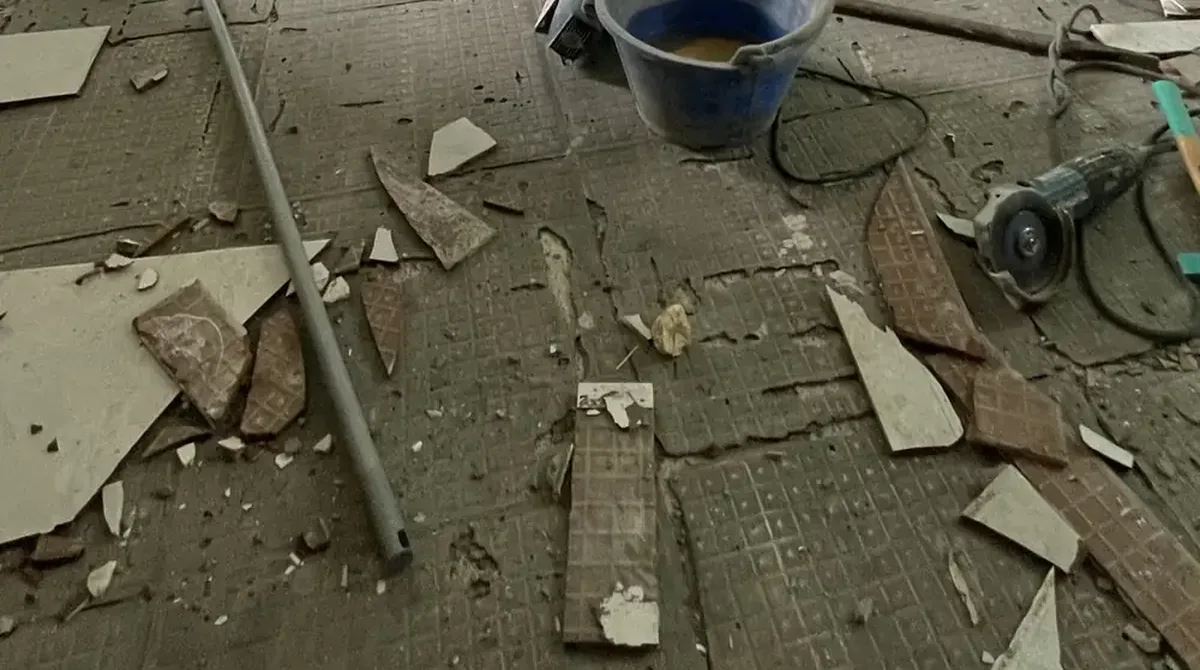
An HDB renovation permit is needed when you replace floor or wall tiles, remove or alter a wall, or redo bathroom finishes. Laying vinyl, building a gypsum or 63mm hollow block partition, and laying new tiles over old ones with adhesive need no permit, though each comes with conditions. Your renovation contractor, who must come from HDB's Directory of Renovation Contractors, applies online with a floor plan of the work.
Which flooring jobs need an HDB renovation permit?
The short version: if the old floor comes up, you need a permit. If the new floor goes on top, you usually do not.
| Job | Permit? | Main conditions |
|---|---|---|
| Vinyl, carpet or linoleum | No | None listed by HDB |
| New finish over old, adhesive only | No | One existing layer underneath at most, screed included. New finish plus adhesive within 13mm. Floor trap untouched |
| Replacing floor tiles | Yes | Finish plus screed within 50mm, with waterproofing in wet areas |
| Replacing bathroom floor tiles | Yes | Not for 3 years from the block's completion date. Waterproofing screed and membrane, turned up at least 150mm |
Sound, flat tiles can stay, and vinyl goes over them with no debris and no permit. Our overlay flooring guide explains when old tiles are good enough, and our HDB vinyl flooring page shows the range.
What does HDB require when floor tiles are replaced?
Replacing tiles means hacking, and HDB sets limits on what goes back down:
- Thickness. The new finish and screed together can be no more than 50mm.
- Bathrooms and toilets. A pre-packed waterproofing screed and a waterproofing membrane go down before the new finish. The membrane turns up at least 150mm against walls and kerbs.
- Kitchens and open balconies. A pre-packed waterproofing screed, with the membrane (again turned up 150mm) only around sanitary stacks, within a 400mm radius.
- Everything else. A UPVC floor trap grating with a long collar, pre-packed screed in dry areas, and no gas pipes embedded in the floor.
Our HDB tiles guide weighs hacking against overlay for a tiled floor.
What about wall tiles and wall finishes?
Same idea, different numbers. Replacing internal wall finishes up to the ceiling needs a permit, with the finish including plaster no thicker than 25mm. A new finish laid over the old one with adhesive needs no permit, but it is capped at 13mm and a third layer is not allowed. Solid timber and mirror wall panels need no permit; their fasteners can be no more than 6mm in diameter and 40mm deep.
Is there a waiting period for bathroom tiles in a new flat?
Yes. In a newly built flat, bathroom and toilet wall and floor finishes cannot be removed for 3 years from the block's completion date. After that, replacing them needs a permit: floor finish within 50mm, wall finish within 25mm, and a waterproofing screed and membrane turned up at least 150mm against walls, kerbs and pipes.
Do partition walls need a permit?
Building one does not. A gypsum partition, or a single layer of 63mm hollow block or 80mm glass block, needs no permit if:
- A new room someone will live in gets adequate natural light and ventilation.
- The fire escape route stays direct, such as bedroom door to main door, and never runs through another room.
- A hollow block wall is one layer only, with an RC lintol over any door or window opening.
- A gypsum partition uses fasteners no more than 6mm in diameter and 40mm deep.
Taking a wall out is different. Removing or altering a non-structural wall of hollow block, brick, drywall or Ferrolite needs a permit and HDB's approval first. Block and brick come down from the top, drywall is removed in full, joint to joint, and if steel bars turn up, work stops and HDB is told. Removing non-load-bearing reinforced concrete also needs a Professional Engineer (Civil/Structural) to supervise. Our partition wall page covers the build side.
HDB permit checker
Pick a job to see whether HDB asks for a renovation permit, and the conditions that come with it.
When can hacking be done in an HDB flat?
Noisy work is allowed from 9am to 5pm on weekdays only. It is not allowed on weekends, public holidays, or the eve of New Year's Day, Chinese New Year, Hari Raya Puasa, Deepavali and Christmas. Hacking must be finished within 3 consecutive days, with no more than 2 handheld power tools in use at a time.
A tile job with hacking usually takes us 5 to 7 days from hacking to grouting; our installation time guide compares vinyl and tile.
Who applies for the HDB renovation permit?
Your contractor submits it electronically on your behalf, with an acknowledgement form you sign. The application is electronic, with a floor plan showing the proposed work, and HDB evaluates some work, such as wall demolition, before approving it. Contractors come from HDB's Directory of Renovation Contractors (DRC), so check the name of whoever is applying. Electrical work must be done by an EMA licensed electrical worker.
Vinyl over sound tiles needs no permit and no hacking. Replacing the tiles brings in the permit, the 50mm limit and the 3-day hacking window.
How do we quote a hacking and flooring job?
We hack out tiles and non-structural walls, wrap what stays, and bag and carry out the rubble as part of the quote. Bathrooms get a fresh waterproofing membrane before any tile goes on, then our own crew lays vinyl or tile on the same quote. Each job is quoted per project after a free site visit; WhatsApp Kayler a photo at +65 8118 5520. Our hacking and demolition page has the full scope.
Read next
- Overlay flooring for HDB
- HDB tiles: hacking or overlay
- How long HDB flooring takes
- Our hacking and demolition service
Common Questions
No. HDB lists laying vinyl, carpet or linoleum as work that needs no renovation permit. If your existing tiles are sound and flat, vinyl can go straight over them with no hacking and no debris. Replacing the tiles themselves is different: that needs a permit, and the new finish and screed together must stay within 50mm.
Yes. Replacing ceramic, homogeneous, terrazzo, marble, timber or other tiles needs an HDB renovation permit. The new finish and screed together can be no more than 50mm. Bathrooms get a pre-packed waterproofing screed and a membrane turned up at least 150mm, kitchens and open balconies get a waterproofing screed, and floor traps get a UPVC grating with a long collar.
Yes, if the new finish is laid with adhesive only. HDB allows it without a permit when there is only one existing layer underneath, screed included, and the new finish with its adhesive is no more than 13mm thick. The floor trap must not be tampered with, and the new floor must not cause backflow or seepage into the bedroom. Not in the household shelter, where adhesive and a second layer are not allowed.
Not for a gypsum partition or a single layer of 63mm hollow block, as long as HDB's conditions are met. A new room needs adequate natural light and ventilation, and the fire escape route must stay direct, not through another room. Hollow block needs an RC lintol over any opening. Gypsum partition fasteners are limited to 6mm in diameter and 40mm in depth.
Your contractor submits it electronically on your behalf, with an acknowledgement form you sign. The application is made with a floor plan showing the proposed work, and HDB evaluates some work, such as demolishing walls, before approving it. Contractors come from HDB's Directory of Renovation Contractors, so check the name of whoever is applying. Electrical work must be done by an EMA licensed electrical worker.
We quote each hacking and retiling job per project after a free site visit, because no two floors involve the same removal and preparation. WhatsApp Kayler a photo of the floor or wall at +65 8118 5520 and we usually reply the same day. Bagging and carrying out the rubble is part of the quote, and the new vinyl or tile goes on the same quote.
Not sure your job needs a permit?
Send Kayler a photo of the floor or wall and tell us what you want to change. We will tell you what HDB asks for at the free site visit, and quote the hacking and the new floor together.
WhatsApp Kayler or call Kayler on +65 8118 5520