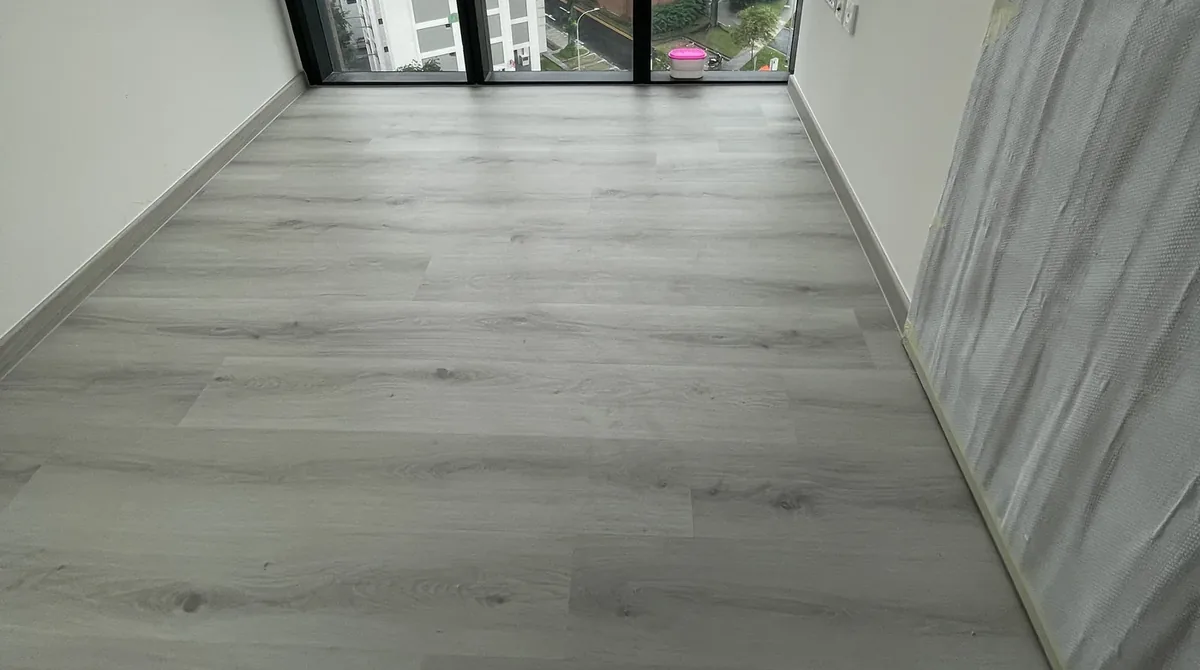
Search for a vinyl flooring supplier in Singapore and you will get three different kinds of business returning the same word. One holds stock and sells you boxes. One lays floors and buys the material in per job. A few do both. The distinction sounds like trade pedantry until a plank lifts in month seven, at which point it decides who you call and whether anyone picks up.
What supplier means here, and why it is three things
The Singapore market splits roughly into three models, and they are priced and warranted quite differently.
| Model | What they do | Who you chase if it fails |
|---|---|---|
| Stockist | Holds inventory, sells material by the box. Usually no installation crew. | You, or whoever you hired to lay it. The stockist warrants the plank, not the floor. |
| Installer | Lays floors, buys material per job from whoever is cheapest that month. | Them for the labour. For the material, whichever brand they happened to buy. |
| Supplier and installer | Carries its own range and lays it with its own crew. | One company, for both. There is nobody to point at. |
None of these is dishonest. The problem is that all three answer to the same search, so you can be well into a conversation before you know which one you are in.
The question that sorts it in one move: "is the crew laying my floor employed by you?" A stockist will say they can recommend someone. An installer will say yes but name a different brand each time you ask what they carry. Ask it early.
Why the split matters more than the price difference
Vinyl flooring fails in two ways, and they look almost identical from the living room. A plank can lift because the material was wrong for the conditions, or because the subfloor was not prepared, the adhesive was wrong, or expansion gaps were not left. The first is a product fault. The second is an installation fault.
When material and labour come from two companies, that distinction becomes a dispute you are standing in the middle of, holding a warranty from one party that explicitly does not cover the other's work. We have been called in to look at floors in exactly that position, and there is rarely a clean answer.
This is the whole reason LN quotes supplied and installed. We carry our own range and lay it with our own crew, so a fault is ours either way.
The number that actually predicts how a floor ages
Ask about vinyl and most quotes will lead with thickness: 4mm, 5mm, 6mm. That is the number printed on the box and it is not the one that matters most.
Thickness is the whole plank. It affects how the floor feels underfoot, how quiet it is, and how forgiving it is over a subfloor that is not perfectly level.
Wear layer is the clear film on top. It is measured separately, usually in millimetres, and it is the only part of the plank that stands between your furniture and the printed design layer. It is what decides whether the floor still looks new in year eight.
These two numbers are independent. A 6mm plank with a thin wear layer will dull and scratch before a 5mm plank with a good one, which is why thickness alone is a poor proxy for quality and a very effective upsell.
LN uses a 0.5mm wear layer across all six of our series. We do not run a cheaper tier with a thinner one, which means the choice between our ranges is about how the floor looks, not how long it lasts. It also means there is nothing for us to upsell you to.
Is vinyl right for this room?
Pick the space and we will tell you straight, including where we would not use it.
Vinyl is the straightforward answer here
Dry, moderate traffic, and comfort matters. LVT is warmer and quieter underfoot than tile, and an overlay can go over a sound existing floor in about a day without hacking.
Ask about: the wear layer in millimetres, and whether subfloor levelling is included in the quote or billed later.
Usually yes, with one caution
A domestic kitchen is fine for quality LVT. It handles splashes and cleaning without trouble. The caution is heat rather than water: keep planks out of prolonged direct sun through a large window, and use pads under anything heavy that gets dragged.
Ask about: how the joint at the wet zone is handled, and whether there is a threshold where the kitchen meets a tiled service yard.
We would use tile instead
This is the room where we recommend against our own vinyl. A bathroom needs a waterproofing membrane laid onto a prepared substrate, and standing water at a floor waste is a different problem from an occasional splash.
Our honest answer: tile the bathroom. We fit both, so we gain nothing by steering you. See our HDB tiles guide for how that job runs.
Depends on the traffic, and it is worth a conversation
Offices and retail work well with LVT. Its acoustics and the fact that a damaged plank can be lifted and replaced without redoing the floor both count in its favour. Heavy or industrial traffic is a different specification question.
Ask about: the fire rating your premises requires. We cover the specification in our commercial flooring guide.
What supplied and installed actually costs
Our LVT runs S$3.20 to S$4.90 per square foot for the 5mm range, supplied and installed. The 6.5mm Ultra series is S$4.80 per square foot. Those figures include the material, the laying, and the workmanship warranty.
If a quote comes back materially below that band, it is worth finding out which of these explains it, because one of them usually does: a thinner wear layer, subfloor preparation excluded and billed as a variation once work starts, or skirting and trims priced separately.
Our warranty is twenty-five years on the material and one year on installation workmanship. Those cover different failures, and a supplier offering only the first has left the more common problem uncovered.
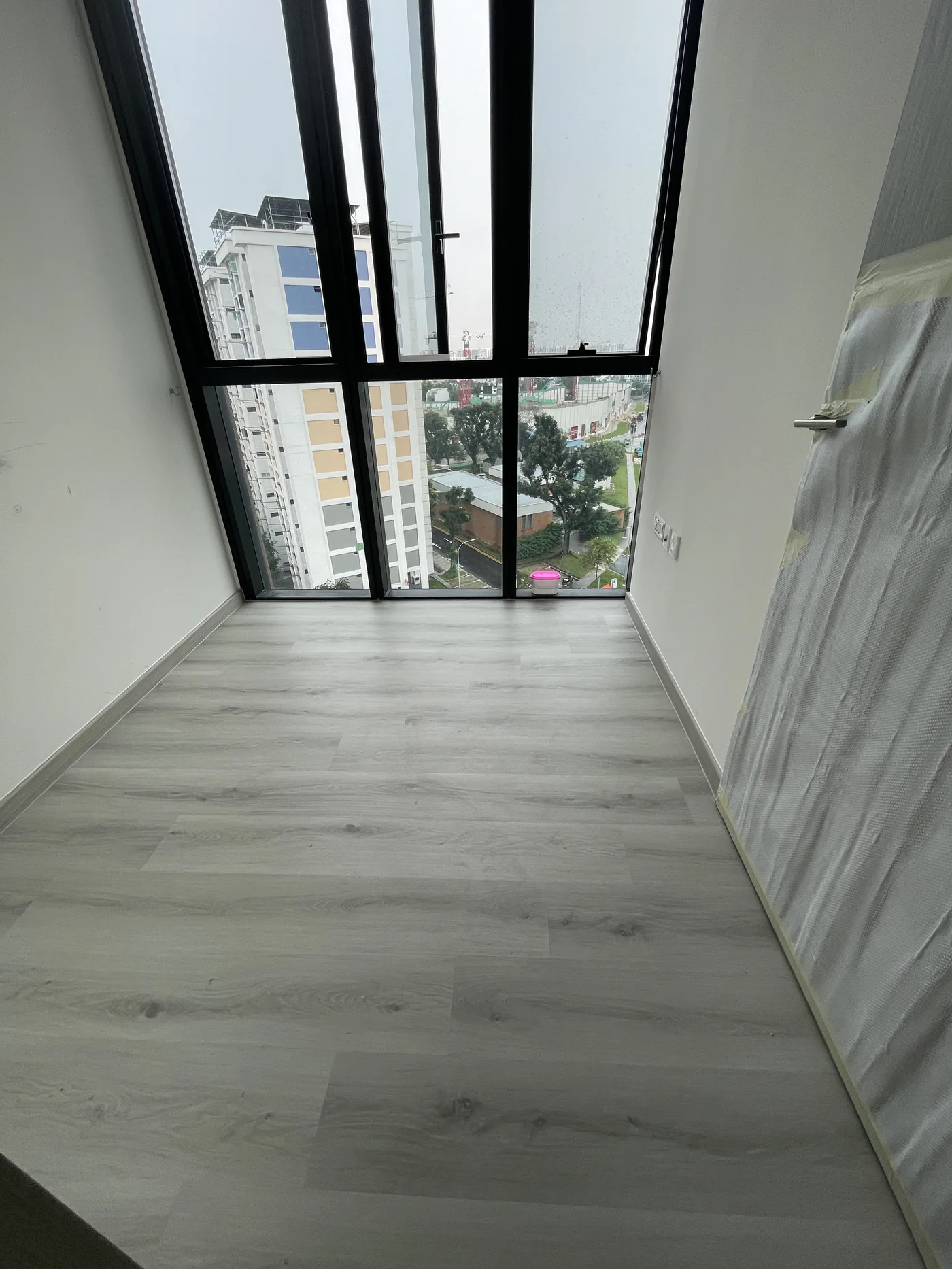
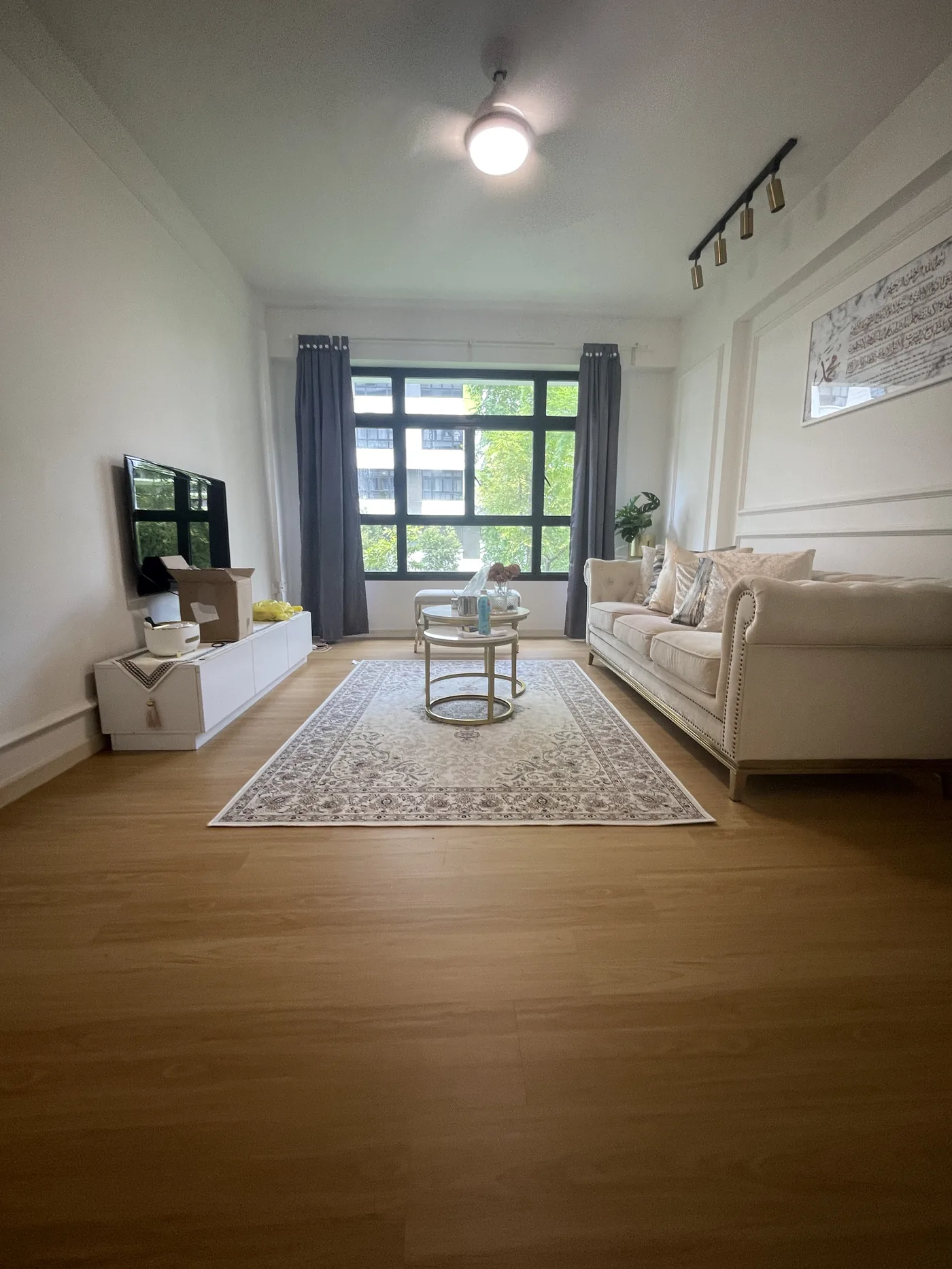
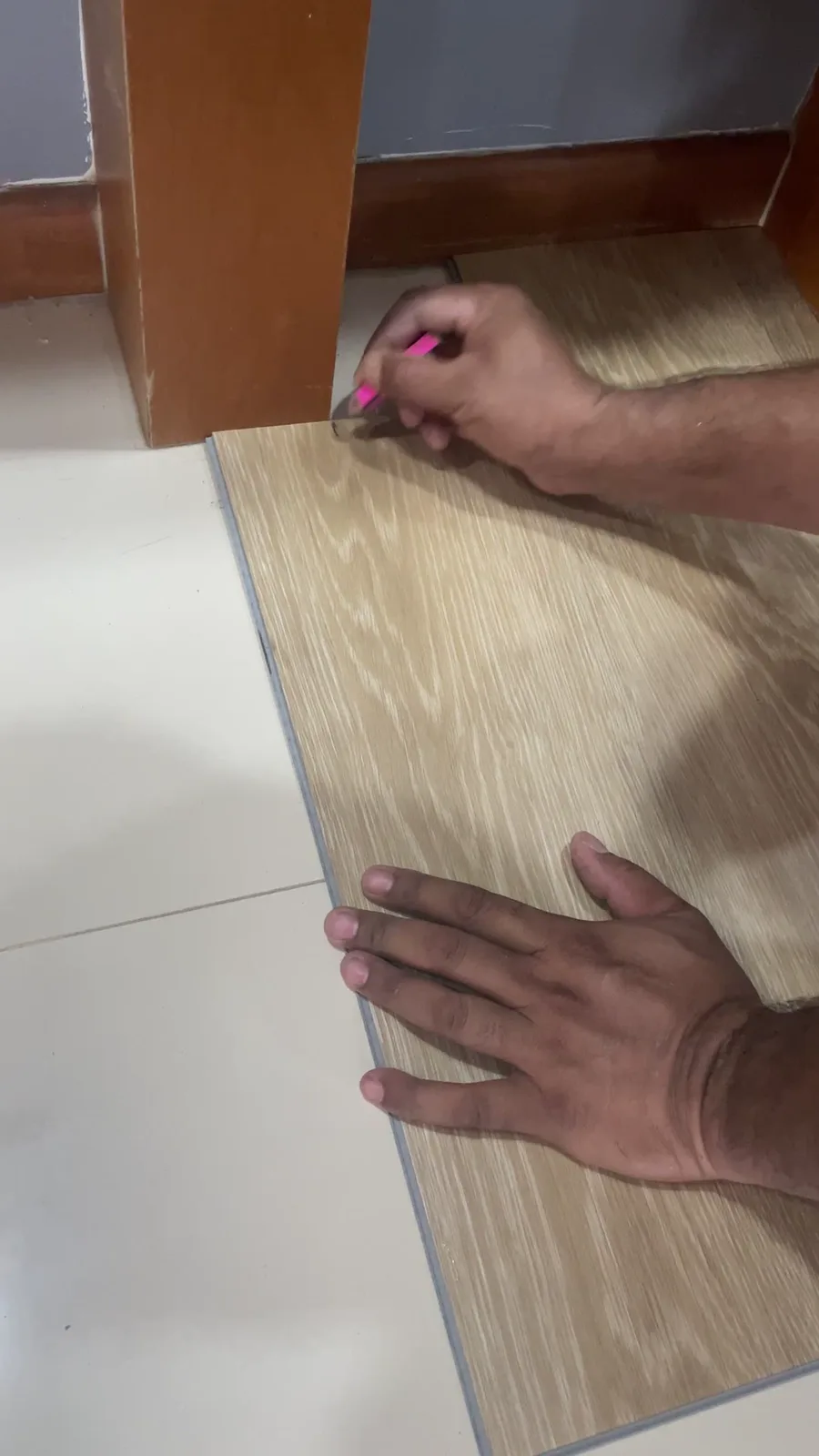
Five questions worth asking any vinyl supplier
- Is the crew laying my floor employed by you? This one question sorts the three business models above.
- What is the wear layer, in millimetres? If the answer is a thickness in mm for the whole plank, ask again. They are different numbers.
- Are both warranties in writing? Material and workmanship. A material warranty alone leaves installation faults uncovered.
- Is subfloor preparation in this price? This is the most common source of a mid-job variation.
- Can I see the actual plank? Screen renderings flatter. Grain, sheen and how a joint reads in daylight are worth seeing in person.
We would rather you asked us all five than not.
Read next
- Our vinyl flooring range, with all six series
- The vinyl flooring buyer's guide, covering LVT, overlay and herringbone
- Whether plank thickness actually matters
- How the LVT brands available in Singapore compare
Common Questions
A supplier holds stock and sells you material. An installer lays it. In Singapore many businesses are one or the other, and a few are both. The distinction matters when something goes wrong: if the material and the labour come from two companies, a lifting plank becomes an argument about whether it is a product fault or an installation fault, and you are in the middle of it. Where one company supplies and installs, there is nobody to point at.
Our pricing is quoted supplied and installed, because that is how we warrant the work. LN carries its own range of six LVT series and lays it with our own crew rather than sub-contracting, which is what lets us give a one-year workmanship warranty alongside the 25-year material warranty. If you have an unusual requirement, speak to Kayler at +65 8118 5520 and we will tell you honestly whether we are the right fit.
The wear layer is the clear protective film on top of the plank, and it is what determines how the floor ages. It is measured in millimetres and is completely independent of the plank's overall thickness, which is the number salespeople usually lead with. For normal residential use a 0.5mm wear layer is a sound specification. LN uses 0.5mm across all six of our series, so the choice between them is about how the floor looks rather than how long it lasts.
LN's LVT runs S$3.20 to S$4.90 per square foot for our 5mm range, supplied and installed. Our 6.5mm Ultra series is S$4.80 per square foot. Those figures include the material, the laying and the workmanship warranty. Where a quote looks materially cheaper, the usual explanations are a thinner wear layer, subfloor preparation left out, or skirting and trims priced separately.
No, and this is the most common misunderstanding in the category. Overall thickness affects how the plank feels underfoot and how forgiving it is over a slightly uneven subfloor. It says nothing about how well the surface resists scratching and dulling, which is the wear layer's job. A 6mm plank with a thin wear layer will look tired before a 5mm plank with a good one. Ask for both numbers, not just the one printed on the box.
Twenty-five years on the material, and one year on installation workmanship. Those cover different things: the material warranty concerns the plank itself, the workmanship warranty concerns how it was laid. Ask any supplier for both in writing, because a material warranty on its own leaves installation faults uncovered, and installation faults are the more common problem.
Usually yes, and it is one of the main reasons people choose it. An overlay goes over a sound, flat existing floor in about a day with no hacking, no debris and no permit-triggering demolition. The existing tiles need to be firmly bonded and reasonably level, and door clearance has to be checked. We assess that at the free site visit rather than promising it in advance.
Want to see the actual plank before you decide?
Send Kayler your property type and the rooms involved. We will bring samples to the site visit so you can see grain and sheen in your own daylight, and quote supplied and installed. Free, no hard sell.
WhatsApp Kayler or call Kayler on +65 8118 5520